2026 Global B2B Industrial Whitepaper

China Best Smart IoT Solar Street Lights Factories & Exporters

Engineering Precision Off-Grid Illumination: High-Efficacy MPPT Architecture, Smart City IoT Controls, and OEM Sourcing Benchmarks for Global Infrastructure Buyers

Flagship Commercial & Industrial Solar Luminaires

High-lumen optical systems manufactured under ISO9001 and certified with UL, DLC, CE, and IP67 ratings for municipal, stadium, and industrial deployment.

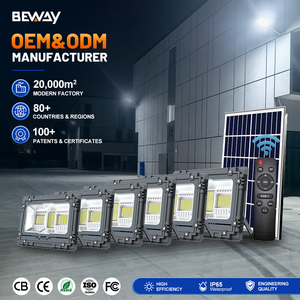
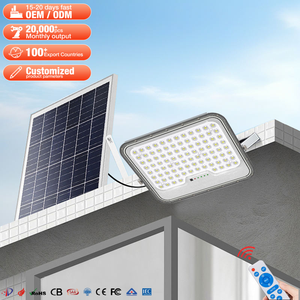
High Mast Solar LED Flood Light 400W-1000W
2025 400W 600W 800W 1000W Solar LED Flood Light For Outdoor Football Field Stadium Tennis Sport Court High Mast Lighting
High Mast LiFePO4 Stadium Grade
Get a Quote
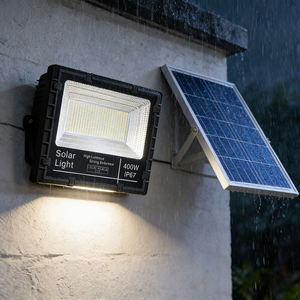
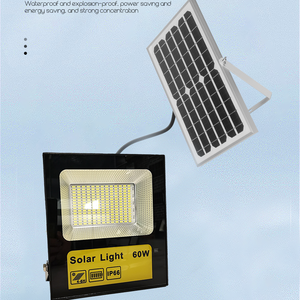
200W IP67 Waterproof Solar Floodlight
Outdoor Solar 200W IP67 Waterproof LED Floodlight with 6000K Daylight 5-Year Warranty for Workshop/Warehouse Use
IP67 6000K Daylight 5-Yr Warranty
Get a Quote
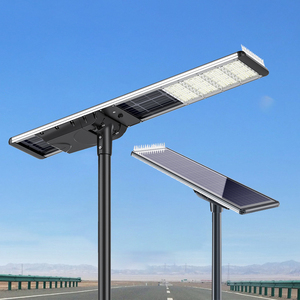
All In One Solar LED Street Light 30W-150W
LECUSO New Outdoor 30w 60w 80w 100w 120w 150w Integrated Industrial All In One Solar Led Street Light
All-In-One Smart IoT Ready Type II/III
Get a Quote
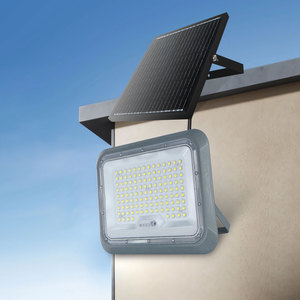
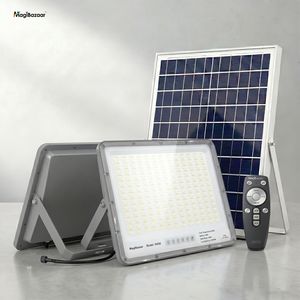
Commercial Solar Flood Light 1000W Factory Area
Commercial Solar Flood Light 1000W Outdoor IP65 Aluminum Waterproof LED with Bracket for Factory Area
1000W Commercial Alloy Casing Heavy Bracket
Get a Quote
Industrial Solar Flood Light 60W-800W
Modern Industrial Outdoor Lighting Fixture 60 100 200 300 500 800 Watt Thickened Glass Durable Aluminum Solar Flood Light
Thickened Glass IK09 Impact Multi-Power
Get a Quote
KCD Stadium Construction Solar Flood Light
KCD Industrial Original High Output Stadium Construction Outdoor 100w 200w 400w 500w 1000w Automatic Solar Flood Light
High Output Auto-Dusk Control Construction Grade
Get a Quote
ZY Stadium Road Solar Flood Light IP67
ZY Industrial Stadium Outdoor Solar Powered LED Flood Light IP67 Road 100W 200W 300W 400W Lifep04
LiFePO4 Cell IP67 Road Optics Long Cycle
Get a Quote
Smart Solar Reflector Light PC Housing
Solar Industrial Smart Waterproof Ip65 Outdoor Solar Led Garden Solar Flood Light PC Housing Solar Reflector Solar Flood Light
Smart Reflector PC UV-Shield IP65 Garden/Road
Get a Quote

Engineering Strengths & Manufacturing Metrics

Our vertically integrated manufacturing ecosystem in China bridge raw material procurement, die-casting, automated SMT, battery assembly, and IoT cloud testing.

200+
Lm/W Optical Efficacy
20+
Years OEM/ODM Expertise
5
Proprietary Automated Factories
7 Nights
Rainy Day Autonomy
500+
Global Municipal Projects

Complete Vertical Integration

From raw aluminum die-casting to specialized digital controller assembly, our 5 manufacturing plants deliver rigorous end-to-end quality control, eliminating third-party component discrepancies and driving down overall unit cost.

Smart MPPT 3.0 Energy Management

Proprietary Maximum Power Point Tracking (MPPT) algorithm yields >98.5% conversion efficiency. Coupled with adaptive dimming profiles, fixtures guarantee non-stop 365-day operation even in extreme weather conditions.

Global Regulatory Compliance

Fully qualified for international bidding requirements with DLC, UL, CE, RoHS, and ISO9001 certifications. Selectable BAA-compliant configurations and wildlife-friendly (dark-sky / turtle-safe) optical filters available.

Strategic Sourcing Trends: The 2026-2030 Smart Solar Era

Information Gain Analysis: Beyond basic lumen output, international commercial buyers are restructuring tender requirements around five key architectural shifts.

1. IoT Grid Convergence & Wireless Protocols

Traditional standalone solar street lights are rapidly being superseded by network-connected mesh topologies. B2B importers prioritize luminaires supporting LoRaWAN, Zigbee 3.0, and NB-IoT. Integrated remote management platforms (ZHAGA/NEMA sockets) allow municipal operators to monitor battery state-of-charge (SOC), schedule dynamic dimming, and receive real-time fault alerts—cutting field maintenance costs by up to 65%.

2. Premium Efficacy (200+ Lm/W) & Optical Precision

With energy efficiency at the forefront, next-generation solar street lights utilize high-efficiency LED chips (such as Lumileds Luxeon 5050 or Cree LED arrays) paired with customized Batwing Type II/III optical lenses. Reaching system efficiencies of 200 to 220 Lm/W permits smaller solar panel dimensions and reduced battery capacities without sacrificing required lux levels on multi-lane highways.

3. Advanced LiFePO4 Energy Storage Safety

Procurement protocols have completely shifted away from legacy Lead-Acid (AGM/Gel) batteries to grade-A LiFePO4 (Lithium Iron Phosphate) cell chemistries. Thermal stability up to 65°C, integrated BMS (Battery Management System) protection against overcharge/overdischarge, and cycle lives exceeding 4,000 cycles (at 80% DOD) are now minimum standard criteria in government RFPs.

Industrial Engineering & Architecture Comparison

Understanding structural topologies: Selecting between All-in-One, All-in-Two, and Hybrid Smart Solar Street Lighting configurations.

System Architecture Ideal Application Scenario Optical Efficacy Battery Capacity Range IoT & Control Protocol Maintenance Index
Integrated All-in-One (AIO) Urban streets, pathways, industrial parks, parking lots 180 – 200 Lm/W 20Ah – 120Ah (LiFePO4) Bluetooth Mesh, Microwave Sensor, LoRaWAN Ultra-Low (Plug & Play)
Split / All-in-Two System High-mast stadium lighting, multi-lane highways, heavy snow zones 190 – 210 Lm/W 100Ah – 400Ah (External Box) NB-IoT, NEMA/ZHAGA Smart Node Moderate (Modular Servicing)
Hybrid AC/DC Solar System Critical infrastructure, continuous operational highways, security zones 200 – 220 Lm/W Auto Grid Backup + LiFePO4 Smart Cloud Management Platform Low (Dual Power Redundancy)
Cylindrical Vertical PV Poles High-wind coastal corridors, architectural landscapes, city centers 175 – 195 Lm/W Embedded Tubular Pack 5G Smart Micro-cell Ready Very Low (Self-cleaning Design)

China Exporter Vetting: Industrial Procurement Framework

A structured technical playbook for B2B buyers, EPC contractors, and municipal engineering departments to evaluate Tier-1 solar lighting exporters in China.

Step 1: Verification of Photometric IES Files

Require suppliers to provide independently certified IES (Illuminating Engineering Society) LM-79 and LM-80 reports. Verify that optical simulations in DIALux match advertised lux coverage, glare indices (UGR), and uniformity ratios across targeted pole heights and spacing.

Step 2: Battery Cell Grade & BMS Audit

Inspect the provenance of the internal power storage. Tier-1 exporters use brand-new Grade-A LiFePO4 cells (e.g., EVE, CATL, BYD) rather than recycled or second-life cells. Ensure the smart BMS features thermal cutoff sensors, cell balancing, and short-circuit protection.

Step 3: Salt Spray & Enclosure Ratings

Outdoor industrial lighting must endure aggressive atmospheric conditions. Verify IP66/IP67 ingress testing and a minimum of 1,000-hour Salt Spray Testing (ASTM B117) on die-cast ADC12 aluminum housings with powder-coated UV-resistant finishes.

Frequently Asked Questions (FAQ) for Global Buyers

Essential procurement insights addressing manufacturing timelines, customization options, climate resilience, and warranty assurances.

What key metrics define a top-tier Chinese IoT solar street light manufacturer?
A top-tier factory must possess complete vertical integration—in-house die-casting, automated SMT PCB assembly, dedicated battery pack assembly lines, and optical testing laboratories equipped with integrating spheres and goniophotometers. Furthermore, ISO9001 certification, full LM-79/LM-80 optical data, and proven IoT firmware customization capabilities (LoRaWAN/Zigbee/NB-IoT) distinguish leading OEM/ODM exporters from simple assembly workshops.
How do smart IoT controllers enhance solar street light reliability?
Smart IoT controllers integrate digital MPPT charging algorithms with wireless communication chips. Instead of operating on fixed timer schedules, IoT luminaires continuously analyze real-time solar harvesting efficiency and battery state-of-charge. If prolonged cloudy weather is detected, the system autonomously adjusts dimming curves to preserve energy, ensuring non-stop illumination while transmitting health telemetry (voltage, temperature, lamp status) to a central cloud dashboard.
How do LiFePO4 batteries perform under extreme temperature conditions (-40°C to +65°C)?
High-grade Lithium Iron Phosphate (LiFePO4) chemistry exhibits exceptional high-temperature resilience up to 65°C without thermal runaway risks. For freezing sub-zero environments (-20°C to -40°C), premium export fixtures incorporate intelligent BMS heating pads (thermostatically controlled thermal wraps) powered by early-morning solar input, restoring internal cell temperatures to optimal charging zones safely.
What is the typical production lead time and Minimum Order Quantity (MOQ) for OEM/ODM projects?
Standard OEM production lead times range from 15 to 25 calendar days following engineering sample sign-off and deposit receipt. Sample orders for engineering validation can be dispatched within 5-7 days. MOQs vary depending on custom tooling requirements: standard catalog items have flexible MOQs starting at 10-20 units, while full custom color housings or proprietary CCT optical lens molds typically start at 100-200 units.
What warranty structures and field support frameworks are offered?
Industrial export products are backed by comprehensive 3-year to 5-year full component warranties (covering LED module, PV panel, controller, and battery). Warranty services include advance component replacement, dedicated technical engineering remote support, and DIALux photometric recalculations for project expansion phases.

Request Custom Project Engineering & Factory Direct Pricing

Partner with China’s premier smart IoT solar lighting exporter. Obtain comprehensive photometric simulations, BOM calculations, and custom OEM quotations within 24 hours.