Municipal & Industrial Grade Solar Solutions

China Best Motion Sensor Commercial Solar Lights Manufacturer & Exporter

Pioneering 200 Lm/W Optical Efficiency, Smart Microwave Radar Motion Sensing, and Ultra-Durable LiFePO4 Energy Storage Systems for Global B2B Infrastructure Projects.

Commercial Motion Sensor Solar Lighting Systems

Engineered for high-intensity commercial areas, industrial yards, public roads, and stadiums. Featuring integrated intelligent dimming protocols and zero-grid carbon emission compliance.
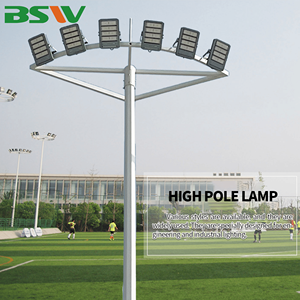
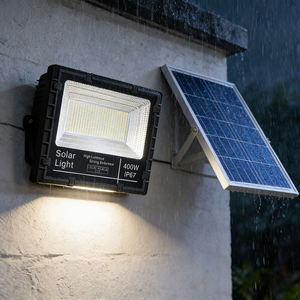
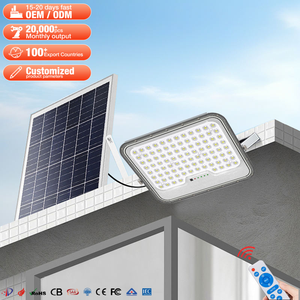
2025 400W 600W 800W 1000W Solar LED Flood Light

2025 High Mast Stadium Solar Flood Light (400W–1000W)

  • Optical Efficacy: 190–200 Lm/W
  • Motion Sensor: 24GHz Doppler Radar (15m Range)
  • Battery Type: Grade-A LiFePO4 3.2V/100Ah
  • Protection Rating: IP67 Waterproof / IK10
Send an Inquiry
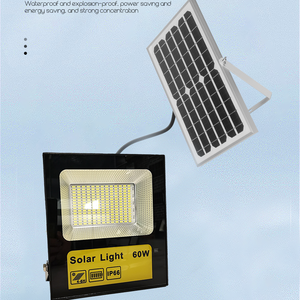
Outdoor Solar 200W IP67 Waterproof LED Floodlight

Commercial 200W Industrial Solar Warehouse Floodlight

  • Color Temp: 6000K Daylight Spectrum
  • Sensors: Dual PIR Motion & Photocell
  • Housing: Pressure Die-Cast Aluminum
  • Warranty: 5 Years Full Factory Warranty
Send an Inquiry
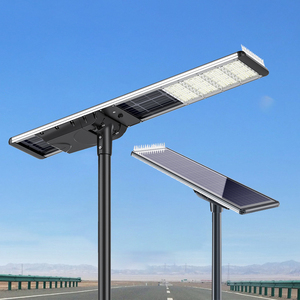
LECUSO All In One Solar Led Street Light

Integrated All-In-One Solar Street Light (30W–150W)

  • Design Type: Sleek Monocrystalline PV Integrated
  • Controller: MPPT Smart Dimming (98.5% Eff.)
  • Detection Angle: 120° Wide PIR Motion Zone
  • Autonomy: 5–7 Continuous Rainy Days
Send an Inquiry
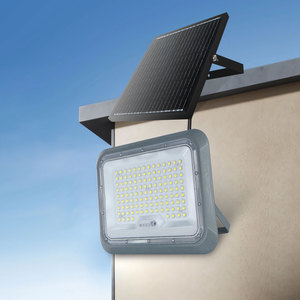
Commercial Solar Flood Light 1000W Outdoor IP65

1000W Heavy-Duty Factory Area Solar Floodlight

  • Lumen Output: Max 16,000 Lumens
  • Mounting: 360° Adjustable Heavy Bracket
  • PV Module: High-Efficiency Mono PERC
  • Application: Logistics Parks & Factories
Send an Inquiry
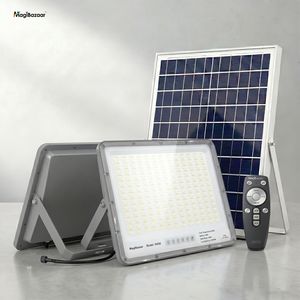
Modern Industrial Outdoor Lighting Fixture Solar Flood Light

Thickened Glass Industrial Outdoor Solar Light (60W–800W)

  • Lens Material: Tempered Explosion-Proof Glass
  • Smart Controls: Infra-Red Remote & Motion Switch
  • Heat Sink: Multi-Fin Heat Dissipation Housing
  • Lifecycle: >6,000 Battery Charge Cycles
Send an Inquiry
High Output Stadium Construction Outdoor Solar Flood Light

KCD Series High-Output Construction Solar Lighting

  • Power Options: 100W / 200W / 400W / 500W / 1000W
  • Motion Protocol: Adaptive Step Dimming (30%/100%)
  • Ingress Rating: IP67 Sealed Junction Gaskets
  • Certification: CE, RoHS, ISO9001 Certified
Send an Inquiry
ZY Industrial Stadium Outdoor Solar Powered LED Flood Light

ZY Road & Stadium Solar LED Flood Light System

  • LED Chips: High-Efficacy Lumileds 5050
  • Battery Tech: New Cell LiFePO4 Energy Storage
  • Distribution: Type II / Type III Optical Pattern
  • Sensor Latency: <0.2 Seconds Fast Triggering
Send an Inquiry
Solar Industrial Smart Waterproof IP65 Outdoor Solar LED Reflector Light

Smart Waterproof Reflector Commercial Solar Light

  • Housing Type: Anti-UV Polycarbonate & Aluminum
  • Sensor System: Ambient Light + Motion Hybrid
  • Beam Angle: 120° Wide Angle Reflector Lens
  • Deployment: Perimeter Security & Gateways
Send an Inquiry
200+
Lumens Per Watt (Lm/W)
20+
Years Manufacturing Excellence
5
In-House Manufacturing Bases
6,000+
LiFePO4 Battery Cycle Life

Engineering Architecture of Motion Sensor Commercial Solar Lighting

A comprehensive examination of hardware integration, energy management algorithms, and sensor electronics driving modern industrial off-grid illumination.

24GHz Microwave Doppler Radar Sensing

Unlike conventional Passive Infrared (PIR) sensors that rely on thermal contrast, our 24GHz Microwave Radar sends high-frequency electromagnetic pulses to detect minute movement up to 15 meters away across a 360-degree radius. It operates unimpeded by ambient temperatures, blowing dust, heavy rain, or foliage interference.

Ultra-Efficient MPPT Tracking Controllers

Our proprietary Maximum Power Point Tracking (MPPT) electronic controllers continuously monitor the IV (current/voltage) curve of solar panels, adjusting impedance dynamically. This delivers a 98.5% charging conversion efficiency—yielding up to 30% faster battery replenishment compared to standard PWM controllers in low-light overcast conditions.

Grade-A Lithium Iron Phosphate (LiFePO4) Storage

Engineered with EV-grade LiFePO4 cells, our battery systems incorporate advanced BMS (Battery Management System) microprocessors to regulate cell balancing, thermal protection, over-charge, and deep-discharge protection. Operating cleanly between -20°C and +70°C, these systems achieve over 6,000 operational charge cycles at 80% DoD.

Technical Specification & Comparison Matrix

Understanding the hardware disparity between commercial-grade motion sensor solar lighting and low-tier residential alternatives.

Performance Metrics Industrial Grade (Our Manufacturing Standard) Standard Commercial Grade Low-Tier Retail Solar Lights
Luminous Efficacy 190 – 200 Lm/W (Lumileds 5050 / Cree) 130 – 150 Lm/W 80 – 100 Lm/W
Motion Sensing Tech 24GHz Microwave Doppler Radar (12–15m range) Standard PIR Thermal Sensor (5–8m range) Basic PIR Sensor (3–5m range)
Battery Chemistry LiFePO4 Grade-A (3.2V / 12.8V) with Active BMS Standard LiFePO4 / Ternary Lithium Recycled Li-ion / Lead-Acid
Solar Panel Type N-Type TOPCon / Monocrystalline PERC (23.5% Eff.) Standard Monocrystalline (19% Eff.) Polycrystalline / Amorphous (14% Eff.)
Battery Autonomy 5 to 7 Days (Continuous rainy/cloudy days) 2 to 3 Days < 1 Night
Ingress & Impact IP67 / IP68 Enclosure, IK10 Glass IP65 Enclosure, IK08 IP64 Plastic Housing
Service Life Span 10 to 12 Years (System Lifespan) 3 to 5 Years 6 to 12 Months

2026–2030 Commercial Solar Lighting Procurement Trends

Key technological shifts shaping tender specifications, municipal code compliance, and global commercial lighting distribution strategies.

1. Mandated Integration of Intelligent Sensor Profiles

Global municipal lighting specifications increasingly reject fixed-wattage off-grid luminaires due to battery sizing overheads. Procurement guidelines now mandate multi-stage sensor profiles: 100% full lumen output upon motion detection, stepping down seamlessly to a 20% or 30% ambient baseline after 30 seconds of inactivity. This dynamic dimming prolongs battery autonomy by up to 350%, ensuring uninterrupted night-long illumination across winter seasons.

2. Transition to N-Type TOPCon and Flexible PV Modules

Standard P-type monocrystalline panels are rapidly being replaced by N-Type TOPCon (Tunnel Oxide Passivated Contact) photovoltaic cells in commercial lighting production. Delivering conversion efficiencies over 24.5% alongside lower temperature coefficients, N-type cells generate significantly higher power in high-temperature equatorial regions as well as low-irradiance northern latitudes.

3. IoT Mesh Networking & Remote Central Monitoring

Enterprise procurement teams are migrating toward interconnected solar street lights equipped with LoRaWAN, Zigbee, or Cellular NB-IoT communication modules. Facility managers can monitor individual battery state-of-charge (SoC), real-time motion detection counts, solar energy yields, and lamp failure diagnostics directly via centralized cloud dashboards—drastically reducing maintenance site visits.

4. Strict Compliance with BAA and Dark-Sky Directives

Environmental regulations across North America and Europe demand strict optical light pollution control. Modern commercial solar fixtures feature full-cutoff Type II, III, and V optical distribution lenses that prevent upward light spill (IDA Dark-Sky compliant). Furthermore, projects receiving federal funding demand BAA (Buy American Act) and regional certification compatibility, driving OEM manufacturers to deliver versatile modular designs.

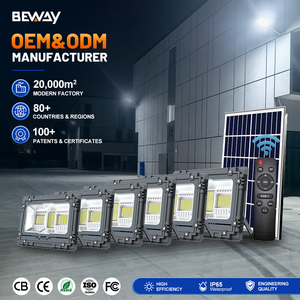
OEM/ODM Manufacturing Excellence & Quality Control

Backed by over two decades of manufacturing leadership, 5 specialized production bases, and strict vertical integration.

In-House Die-Casting & CNC

We operate proprietary aluminum high-pressure die-casting facilities. Our heavy-duty luminaire bodies feature anti-corrosion marine-grade ADC12 aluminum with automated electrostatic powder coating, surviving 1,000-hour salt spray testing (ISO 9227 standard).

Automated SMT & Testing

Surface Mount Technology (SMT) lines assemble high-brightness LED modules with precision thermal interface materials (TIM). Every driver undergoes 100% automated optical inspection (AOI) and 48-hour continuous burn-in testing under elevated ambient temperatures.

Photometric & IES Laboratory

Equipped with state-of-the-art Goniophotometer systems and Integrating Spheres, our engineering team provides complete IES photometric layout files for Dialux simulation, ensuring your engineering proposals fulfill exact lux level requirements.

Commercial Solar Lighting Procurement FAQs

In-depth technical answers to critical engineering, installation, and procurement questions.

Q1: Why choose Microwave Radar motion sensors over traditional PIR sensors for commercial applications?
Microwave Radar sensors utilize Doppler effect technology (24GHz frequency) to detect moving targets by analyzing reflected electromagnetic waves. PIR sensors detect skin-to-ambient temperature differentials; consequently, when ambient temperatures rise above 35°C (95°F), PIR sensor sensitivity drops dramatically. Microwave radar functions consistently up to 70°C, passes through non-metallic covers, covers twice the physical detection radius (up to 15m), and provides instantaneous triggering ideal for vehicular and pedestrian traffic.
Q2: How do motion sensor commercial solar lights maintain illumination during 5–7 continuous rainy days?
Autonomy is achieved through a synergy of energy management techniques: First, oversized Grade-A LiFePO4 battery capacity stores ample reserve power. Second, smart MPPT controllers execute adaptive dimming algorithms—when battery State of Charge (SoC) drops below 30%, the system automatically throttles standby brightness to 10-15%, preserving full 100% burst illumination only when motion is triggered. This conserves power while maintaining essential security lighting.
Q3: What are the key differences between All-In-One (Integrated) and Split-Type Motion Sensor Solar Lights?
All-In-One (Integrated) solar lights combine the PV panel, LiFePO4 battery, motion sensor, LED module, and MPPT controller inside a single housing. They offer rapid 10-minute installation, lower shipping volume, and sleek aesthetics—ideal for parking lots, pathways, and 4–8m mounting heights. Split-Type solar lights house the solar panel separately from the luminaire head, allowing larger solar arrays (up to 400W+) and bigger battery banks needed for high-mast stadium lighting (10–15m+ heights) or extreme northern latitudes with limited sun hours.
Q4: What is the expected operating lifespan of the solar panel, battery, and LED modules?
Our Monocrystalline PERC/TOPCon solar panels carry a 25-year linear performance warranty (>80% output at year 25). The Grade-A LiFePO4 battery pack is rated for 6,000+ cycles at 80% Depth of Discharge (DoD), translating to roughly 10–12 years of real-world daily service. Lumileds/Cree LED chips are driven below maximum current to achieve an L70 lifetime rating exceeding 100,000 operating hours.
Q5: Can these commercial solar fixtures operate in freezing sub-zero winter temperatures?
Yes. While standard lithium-ion batteries fail or freeze below 0°C, our industrial solar lighting systems can be configured with specialized low-temperature LiFePO4 battery chemistry or integrated thermo-regulated BMS heating pads. This allows full charging and discharging operations down to -30°C (-22°F), validated across our cold-weather project installations in Northern North America and Europe.
Q6: What documentation and certifications do you provide for engineering project tenders?
We provide comprehensive B2B engineering documentation packages, including IES photometric data files (for Dialux lighting design), UL 8750 test reports, DLC (DesignLights Consortium) qualification listings, CE certificates, RoHS compliance declarations, IP67 waterproof test reports, ISO 9227 salt spray certificates, and complete structural wind load analysis reports (up to 150 mph / 67 m/s resistance).
Q7: How does your factory support OEM/ODM customized B2B orders?
As a direct manufacturer with 5 production bases, we offer complete OEM/ODM customization. This includes custom optical distribution lenses (Type II, III, IV, V), tailor-made color temperatures (2700K to 6500K, including Amber turtle-friendly chips), custom housing powder coating colors (RAL matching), laser-etched brand labeling, custom packaging, and specialized microwave sensor firmware settings.

Request a Free Photometric Design & B2B Quote

Partner directly with China's leading commercial solar lighting manufacturer. Our senior engineering team provides Dialux lighting layouts, ROI calculations, and factory-direct pricing for your infrastructure projects.

Send an Inquiry