High Mast Stadium

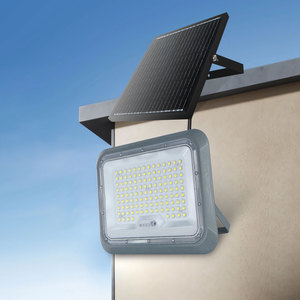
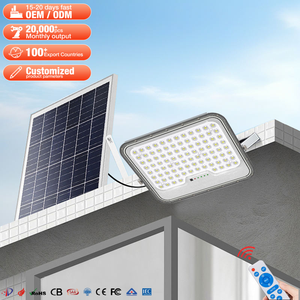
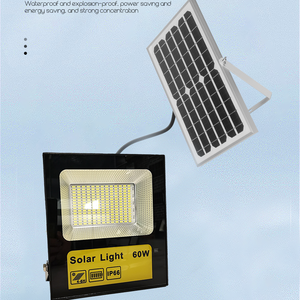
2025 400W–1000W High Mast Solar LED Flood Light for Outdoor Stadiums & Sports Courts
400W-1000W
LiFePO4 Storage
High Mast Optic

Factory-Direct Commercial Solar Floodlights & Integrated Microgrid Luminaire Systems Engineered for Harsh Environments
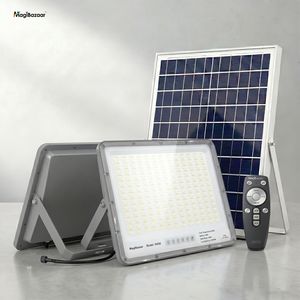
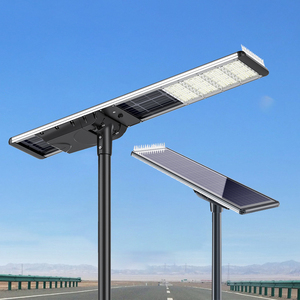
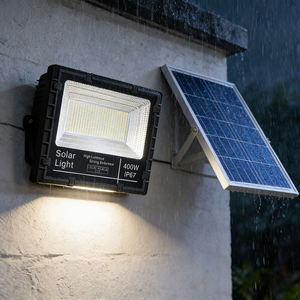
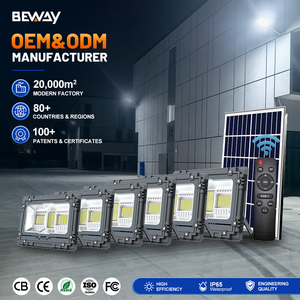
Global municipal utility infrastructures are undergoing a structural transition. As decarbonization mandates intensify and energy grid volatility increases across North America, Europe, and developing economic zones, legacy AC-grid street lighting systems are rapidly becoming fiscal liabilities. Conventional grid-tied lighting incurs severe maintenance overheads, vulnerability to localized grid blackouts, high trenching costs ($50–$150 per linear meter), and continuous electricity tariff increases.
Enter Microgrid Solar Street Lighting Architecture. Designed as autonomous, decentralized DC electrical ecosystems, modern microgrid solar luminaires integrate high-efficiency photovoltaic modules, advanced lithium iron phosphate ($\text{LiFePO}_4$) energy storage, maximum power point tracking (MPPT) power electronics, and high-lumen optical engines into self-sustaining nodes. China has solidified its position as the global powerhouse for microgrid solar lighting engineering, holding over 85% of global manufacturing capacity and driving breakthrough innovations in system efficiency, thermal management, and smart city telemetry.
Eliminates central AC inverter single-point failures and transmission losses. Direct DC-to-DC energy conversion increases net system efficiency by 18–24% compared to AC-coupled solar setups.
Leveraging premium Lumileds and Cree LED dies matched with customized optical lenses, achieving luminous efficacy up to 200 lumens per watt to minimize battery capacity requirements.
Smart adaptive power controllers dynamically scale lumen output based on real-time State-of-Charge (SoC) calculations, guaranteeing continuous light through 7 consecutive rainy or overcast days.
To achieve municipal-grade reliability (99.9% uptime over a 10-to-15 year lifecycle), top-tier Chinese manufacturers have abandoned off-the-shelf commercial components in favor of vertically integrated engineering. A true microgrid street lighting luminaire is composed of four critical sub-systems operating in precise equilibrium:
Traditional solar streetlights relied on polycrystalline solar panels with conversion efficiencies topping out around 15–17%. Modern industrial microgrid systems manufactured in China utilize Grade-A Monocrystalline PERC and N-Type TOPCon cells delivering 22.5% to 24.5% module efficiency.
Furthermore, top export-grade fixtures incorporate anti-reflective tempered glass with hydrophobic self-cleaning coatings and integrated bifacial PV technology. Bifacial modules harvest reflected ambient light (albedo) from asphalt, snow, or surrounding terrain, delivering up to a 15–20% power boost during low-irradiance winter conditions.
Energy storage remains the primary failure point in budget solar lights. Leading Chinese microgrid exporters have completely phased out ternary lithium ($\text{LiNiCoMnO}_2$) and AGM lead-acid chemistry in favor of premium Grade-A Prismatic Lithium Iron Phosphate ($\text{LiFePO}_4$) cells.
| Battery Metric / Parameter | Prismatic LiFePO4 (Tier-1 China Factory) | Standard NMC Lithium Cell | Traditional AGM Lead-Acid |
|---|---|---|---|
| Cycle Life (80% DoD) | 4,000 to 6,000+ Cycles | 1,200 to 1,500 Cycles | 400 to 600 Cycles |
| Operational Lifespan | 10 to 12+ Years | 3 to 5 Years | 1.5 to 2 Years |
| Thermal Stability Window | -20°C to +70°C (-4°F to 158°F) | -10°C to +50°C | -5°C to +40°C |
| Thermal Runaway Temperature | 270°C (Non-Explosive, Ultra-Safe) | 150°C (High Risk) | N/A (Gassing Risk) |
| Energy Density (Wh/kg) | 160 – 180 Wh/kg | 200 – 240 Wh/kg | 35 – 45 Wh/kg |
| Integrated BMS Protection | Active Balancing + Dual Thermal Cutoff | Basic Overcharge Protection | None (External Controller) |
The brain of the microgrid streetlight is the digital Maximum Power Point Tracking (MPPT) controller. Standard PWM controllers suffer energy losses of up to 30%, whereas advanced digital MPPT controllers continuously track the V-I characteristic curve of the PV module at a sampling frequency of >100Hz, realizing tracking efficiency >99.5% and charging efficiency >97%.
Export-oriented factories integrate IoT communication protocols—including LoRaWAN, NB-IoT, and Zigbee—directly onto the controller board. Municipal engineers can monitor real-time battery voltage, solar charging current, LED junction temperature, and luminaire operating status via centralized web dashboards and mobile applications, drastically cutting operation and maintenance (O&M) expenditures.
Photometric performance determines how effectively generated power translates into roadway safety. Top OEM/ODM manufacturers utilize optical-grade PMMA (poly-methyl methacrylate) lens arrays designed with specialized batwing light distribution patterns (Type II-M, Type III-M). This directs light precisely onto multi-lane highways and sidewalks while preventing trespass light, sky glow, and glare compliant with Dark Sky Guidelines.
As municipal authorities, EPC contractors, and commercial developers evaluate supply chain partners in China, several macro technological trends are shaping next-generation purchasing specifications:
For urban retrofit projects, demand is surging for hybrid solar street lights. These systems run 100% off solar microgrid power under normal conditions but seamlessly switch to AC grid power during extended severe weather events, ensuring zero downtime while reducing grid energy consumption by >90%.
Solar microgrid lighting poles are evolving into smart city digital hubs. Municipalities are specifying lighting structures equipped with 5G micro-base stations, public Wi-Fi access points, EV charging sockets, CCTV security cameras, environmental air quality sensors, and digital LED signage powered by central solar storage systems.
European and North American procurement tenders increasingly mandate full Environmental Product Declarations (EPD) and Life Cycle Assessments (LCA). Top Chinese exporters now design plug-and-play modular housing units that allow battery modules or driver cards to be swapped in under 3 minutes without dismounting the luminaire body.
Over Two Decades of In-House R&D, Vertical Integration, and International Compliance Standardization
Complete end-to-end vertical control across 5 dedicated manufacturing plants: Aluminum Die-Casting, SMT Circuit Surface Mounting, Optical Lens Molding, Solar Panel Lamination, and BMS Lithium Battery Assembly.
Engineered with luminaire-level efficacy reaching up to 200 lumens per watt. Utilizing bin-sorted Lumileds chips and ultra-pure optical PMMA matrices to deliver maximum lux per consumed watt.
Products are fully certified for worldwide municipal deployment, holding DLC Premium, UL Listed, CE Mark, IEC 62133, RoHS, IP67 waterproof, and optional BAA-compliant commercial builds.
Backed by established relationships with premier electrical wholesale distribution channels including WESCO International, Border States Electric, Platt Electric Supply, and Lonestar Electric Supply.
Engineered for extreme climate resilience. Designed to deliver continuous illumination through winter freezes, sandstorms, and monsoon cycles with up to 7 days of autonomous power reserves.
Our in-house application engineering team provides zero-cost DIALux photometric reports, site solar irradiance analyses, wind load calculations (up to 160 mph), and comprehensive ROI projections for project tenders.
Sourcing microgrid solar street lights from overseas requires rigorous technical vetting. The table below outlines key engineering differentials between Tier-1 vertically integrated manufacturers and small-scale assembly workshops:
| Technical Dimension | Tier-1 Vertically Integrated Manufacturer | Standard OEM Assembly Workshop |
|---|---|---|
| Aluminum Housing | ADC12 Die-Cast Aluminum with AkzoNobel Outdoor Anti-Corrosion Powder Coating (1,000hr Salt Spray Certified) | Thin Stamped Aluminum Sheet or Recycled Scrap Alloy (Prone to Oxidation & Cracking) |
| Photovoltaic Module | Grade-A Monocrystalline / TOPCon (22.5%+ Efficiency) with Anti-Reflective Low-Iron Tempered Glass | Grade-B or Off-Spec Polycrystalline / Thin-Film (14–16% Efficiency, Rapid Degradation) |
| Battery Management (BMS) | Custom Digital BMS with Dual Overcharge/Overdischarge, Short-Circuit, and Active Cell Thermal Balance | Generic Board with Basic Cutoff; No Cell Balancing (High Risk of Early Battery Failure) |
| Optical Efficiency | 200 Lm/W Luminaire Output, Custom Batwing Type II/III Optics with <3% Luminous Decay at 50,000 Hours | 110–130 Lm/W Output, Standard Flat Glass or Yellowing Acrylic (High Glare & Light Loss) |
| Quality Control Testing | 100% In-House Testing: IES Integrating Sphere, IP68 Submersion, Salt Fog Chamber, Vibrational Load, Temperature (-40°C to +85°C) | Visual Sample Inspection Only; No Photometric or Environmental Simulation Equipment |
Technical Clarifications for Municipal Engineers, EPC Contractors, and Commercial Importers