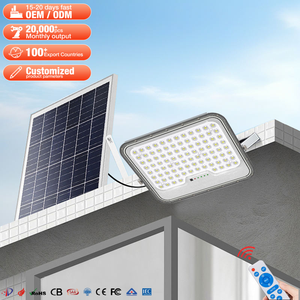
China Best Lithium Battery Commercial Solar Lights Manufacturer & Exporters

Industrial Whitepaper & Engineering Guide: High-Efficacy LiFePO4 Off-Grid Illumination Systems for Infrastructure, Municipal & Commercial Projects

Recommended Commercial Lithium Solar Luminaire Systems

High-lumen, municipal-grade solar floodlights and integrated streetlights powered by grade-A LiFePO4 battery storage and ultra-efficient MPPT smart controllers.
2025 Solar LED Flood Light High Mast Sports Lighting
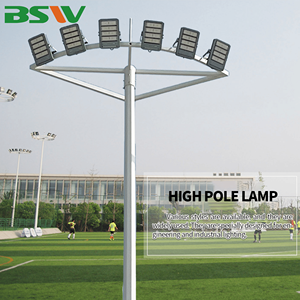
2025 400W–1000W High-Mast Stadium & Sports Field Solar Flood Light
Power Options: 400W / 600W / 800W / 1000W
Battery: Ultra-Capacity LiFePO4 Pack
Application: Stadiums, Courts, High Mast
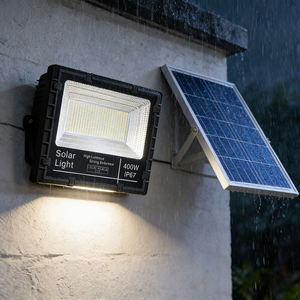
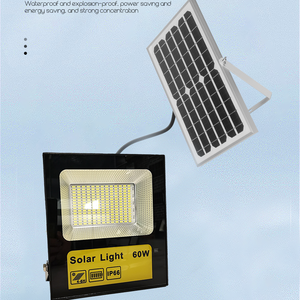
Outdoor Solar 200W IP67 Waterproof LED Floodlight
Industrial 200W IP67 Waterproof 6000K Solar LED Floodlight
Rating: IP67 Waterproof / IK10
CCT: 6000K Daylight Spectrum
Warranty: 5-Year Industrial Grade
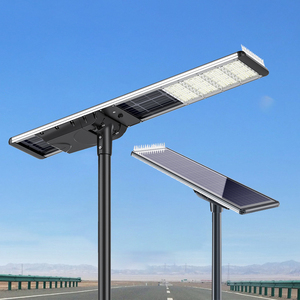
LECUSO Integrated All-In-One Solar LED Street Light
LECUSO Integrated All-In-One Commercial Solar Street Luminaire
Power Range: 30W to 150W
Design: Monocrystalline All-In-One
Application: Municipal Arterial Roads
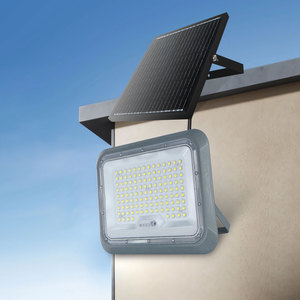
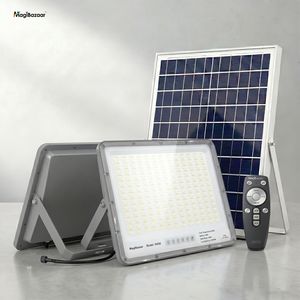
Commercial Solar Flood Light 1000W Aluminum Waterproof LED
1000W Heavy-Duty Die-Cast Aluminum Factory Solar Area Light
Enclosure: ADC12 Die-Cast Aluminum
Protection: IP65 / Weather Sealed
Mounting: Adjustable Heavy-Duty Bracket
Modern Industrial Outdoor Lighting Fixture Solar Flood Light
Modern Industrial Thickened Glass Commercial Solar Flood Series
Wattage Scope: 60W to 800W Modular
Lens: Tempered Explosion-Proof Glass
Life Expectancy: >50,000 Hours LED
KCD Industrial Original High Output Solar Flood Light
KCD High-Output Automatic Construction Site Solar Projector
Capacity: 100W–1000W High Lumen
Operation: Dusk-to-Dawn Automated
Housing: Industrial Corrosion-Resistant
ZY Industrial Stadium Outdoor Solar Powered LED Flood Light LiFePO4
ZY Series IP67 Stadium & Road Solar Luminaire with LiFePO4
Power Range: 100W / 200W / 300W / 400W
Battery Chemistry: 100% New LiFePO4
Protection: IP67 Submersible Grade
Solar Industrial Smart Waterproof IP65 Garden Reflector Flood Light
Smart Optical PC Housing Commercial Reflector Solar Luminaire
Optics: Wide-Angle Reflector Lens
Housing: UV-Stabilized Polycarbonate
Autonomy: Up to 7 Consecutive Rainy Days
200+
Lm/W System Efficacy
20+
Years R&D Excellence
5
Proprietary OEM Factories
6,000+
LiFePO4 Cycle Life (80% DOD)
7 Days
Uninterrupted Rain Autonomy

Executive Summary: The Evolution of Commercial Solar Lighting Systems

The commercial and municipal outdoor lighting sector is undergoing a structural transition from grid-tied LED fixtures to autonomous, off-grid solar-powered lighting architectures. Driven by global decarbonization mandates, rising utility costs, and grid instability, global buyers require highly robust commercial solar luminaires capable of delivering zero-downtime performance. As a top-tier China lithium battery commercial solar lights manufacturer and exporter, our engineering paradigm revolves around combining advanced Lithium Iron Phosphate (LiFePO4) energy storage, high-conversion monocrystalline photovoltaics, and smart Maximum Power Point Tracking (MPPT) power management.

Core Information Gain Insight: Modern commercial solar lighting procurement is no longer evaluated on raw initial wattage. Instead, top engineering consultants prioritize usable lumen output per night, thermal degradation rates, battery cycle economics (LCOS), and total cost of ownership (TCO) over a 10-year design life.

Vertical Manufacturing Integration & Enterprise Authority

Operating across 5 specialized, fully integrated manufacturing facilities in China, our production ecosystem spans aluminum die-casting, automated Surface Mount Technology (SMT) LED assembly, custom LiFePO4 battery pack assembly with integrated Battery Management Systems (BMS), and precision optical lens mold fabrication.

In-House Mechanical & Electrical Engineering

Direct oversight over ADC12 die-cast aluminum enclosures and custom MPPT driver firmware eliminates third-party component markup and guarantees strict tolerance control.

High-Efficacy Optical Systems (200 Lm/W)

Utilizing premium Lumileds and Cree LED packages combined with UV-stabilized optical polycarbonate lenses delivering precise Type II, Type III, and Type V photometric distributions.

Grade-A LiFePO4 Lithium Chemistry

Exclusively deploying new, non-recycled prismatic and 32700 LiFePO4 cells with built-in thermal run-away protection, yielding 6,000+ deep charge/discharge cycles.

Global Compliance & Quality Assured

Products certified under DLC 5.1 Premium, UL Listed guidelines, CE, RoHS, IP67, and IK10. Fully compliant with international municipal procurement protocols.

Technology Development Trends in Commercial Solar Illumination

The commercial solar lighting industry is experiencing rapid technological convergence across energy storage, power electronics, optical engineering, and wireless control systems. Enterprise buyers must understand these core engineering vectors when drafting project technical specifications.

1. Lithium Iron Phosphate (LiFePO4) vs. Legacy Energy Storage

The commercial standard has officially migrated away from lead-acid (AGM/Gel) and conventional Ternary Lithium (NMC) batteries towards LiFePO4 chemistry. LiFePO4 provides superior thermal stability (combustion threshold >500°C), exceptional cycle life under high depth of discharge (DOD), and eco-friendly composition free of cobalt and nickel.

2. Adaptive Smart MPPT Controllers & IoT Telemetry

Traditional PWM (Pulse Width Modulation) charge controllers suffer from energy conversion losses ranging from 20% to 35%. Next-generation commercial fixtures utilize digital MPPT controllers featuring real-time tracking algorithms with >98.5% efficiency. Integrated IoT communication protocols (LoRaWAN, Zigbee, NB-IoT) allow municipal operators to remotely adjust dimming profiles, schedule light outputs, monitor battery state-of-charge (SoC), and execute predictive maintenance.

3. Advanced Thermal Management & Modular Structural Design

LED junction temperature directly dictates lumen depreciation (L70 life). Modern commercial solar floodlights and streetlights integrate fins-designed ADC12 aluminum heatsinks with air convection channels. Separating the battery compartment from the thermal zone of the LED module prevents heat conduction, preserving lithium cell stability even in tropical operating ambient temperatures reaching +65°C.

Future Procurement Trends for Global B2B Solar Light Buyers (2025–2030)

Global procurement strategies are shifting from fragmented component sourcing toward turnkey OEM/ODM architectural systems. Municipalities, EPC contractors, and industrial developers demand fully certified, pre-engineered solutions that minimize installation labor costs and eliminate site wiring liabilities.

Performance Dimension Legacy Lead-Acid Solar Lights Low-Cost Consumer Solar Floodlights Industrial Grade LiFePO4 Solar Systems
Battery Chemistry Gel / Sealed Lead-Acid Recycled NMC / 18650 Lithium Grade-A New LiFePO4 (Prismatic/32700)
Cycle Life (80% DOD) 400 – 600 Cycles 500 – 800 Cycles 4,000 – 6,000+ Cycles
Luminaire Efficacy 90 – 110 Lm/W 120 – 140 Lm/W 180 – 210 Lm/W
Charge Controller Standard PWM (65% Eff.) Basic PWM / Linear Driver Smart Digital MPPT (98.5% Eff.)
Enclosure Protection IP65 Plastic / Sheet Metal Thin ABS Plastic Housing ADC12 Aluminum / IP67 / IK10
Operating Temperature -10°C to 40°C -10°C to 45°C -20°C to 65°C (Heater Option available)
Expected Service Life 2 – 3 Years 1 – 2 Years 8 – 10+ Years (Zero Maintenance)

Key Strategic Sourcing Imperatives:

  • Standardized Photometric Verification: Demand IES LM-79 and LM-80 test reports to ensure lumen claims represent actual fixture output rather than theoretical chip maxima.
  • Anti-Corrosion Surface Finishing: For coastal or humid industrial installations, verified electrophoretic coating or high-grade powder coating (passing 1,000-hour Salt Spray Testing) is mandatory.
  • Modular Component Replaceability: Future-proof procurement relies on quick-connect IP67 waterproof wiring harness connections, permitting rapid field replacement of battery packs or controllers without dismounting the entire fixture body.

Commercial Procurement & Technical FAQ

Direct engineering answers addressing common technical queries raised by municipal planners, electrical wholesalers, and EPC contractors.

Why is LiFePO4 superior to NMC or Lead-Acid for commercial solar lights?
LiFePO4 (Lithium Iron Phosphate) delivers 4,000 to 6,000 deep cycles compared to 500 cycles for lead-acid and 1,200 for NMC. Furthermore, LiFePO4 offers unmatched thermal stability, eliminating fire risks under high outdoor temperatures, and maintains high round-trip efficiency without memory degradation.
How does your system guarantee lighting autonomy during extended cloudy or rainy periods?
Our systems engineer a 3 to 7-day battery autonomy margin combined with smart MPPT energy regulation. When battery capacity drops below threshold levels, the intelligent BMS automatically transitions the luminaire into dynamic dimming power-saving profiles (e.g., adaptive radar motion sensing), preserving illumination until solar charging resumes.
What factory OEM/ODM customization capabilities do you provide for large B2B projects?
We provide full OEM/ODM tailoring including photometric lighting simulation (DIALux reports), customized CCT (2700K to 6500K, Turtle-friendly amber), tailored optics (Type I to Type V), custom housing paint colors (RAL match), brand silk-screening, and custom IoT control integration.
What is the typical warranty coverage and expected lifespans of the main components?
We provide comprehensive standard 3 to 5-year warranties backed by component-level lifespans: Monocrystalline PV panels have a 25-year performance warranty (80% power retention); LED chips are rated for >50,000 hours (L70); LiFePO4 battery packs deliver an operational lifespan of 8–10 years.
How do your lights perform under extreme temperature conditions (cold freezing or desert heat)?
Our fixtures feature die-cast heat-dissipating bodies suitable for ambient temperatures up to +65°C. For extreme cold climates down to -30°C, we supply integrated smart battery heating pads (thermostatic film) powered by the solar array to maintain safe lithium charging efficiency without cell damage.
What international quality certifications do your manufacturing lines hold?
Our factories operate under ISO 9001, ISO 14001, and ISO 45001 management standards. Luminaire lines hold DLC 5.1 Premium, UL Listed, CE, RoHS, CB, IP67 ingress certification, and IK10 impact test compliance.

Precision Manufacturing & Quality Control Protocol

To ensure fault-free field operation across remote municipal sites, our manufacturing facilities adhere to a strict 6-stage Quality Management System (QMS).

1

IQC Cell Sorting & Capacity Grading

100% testing of incoming LiFePO4 lithium cells for internal resistance (IR) and capacity matching before battery pack welding.

2

SMT Optical Board Automated Inspection

Automated Optical Inspection (AOI) verifies LED diode solder integrity, preventing thermal voiding and premature LED failure.

3

High-Pressure IP67 Submersion Chamber

Luminaire enclosures undergo automated pressure-decay and water submersion testing to guarantee complete moisture isolation.

4

72-Hour Full Load Burn-In & Aging

Assembled luminaires undergo continuous 72-hour thermal cycling and charge-discharge testing inside climate-controlled aging rooms.

Partner with China's Premier Lithium Commercial Solar Light Manufacturer

Require customized DIALux lighting simulations, factory-direct OEM quotation pricing, or comprehensive technical datasheets? Connect directly with our senior application engineering team.

Contact Us