
1. Executive Summary & The Paradigm Shift in Off-Grid Public Illumination
The global infrastructure sector is undergoing an unprecedented transition toward zero-carbon municipal illumination. Within this shift, China has emerged as the global epicenter for the R&D, engineering, and mass production of off-grid solar street lighting systems. Modern procurement parameters have moved beyond crude power ratings (wattage) to focus on Levelized Cost of Light (LCOL), system efficacy (Lumens per Watt), thermal management resilience, and energy storage longevity.
Central to this technical revolution is the replacement of legacy Lead-Acid (AGM/Gel) and Ternary Lithium (NMC) chemistries with Lithium Iron Phosphate (LiFePO4 / LFP) energy storage cells. Engineered for extreme operating environments ranging from Middle Eastern deserts (+65°C ambient temperatures) to Nordic sub-zero winters (-30°C), LiFePO4 technology has established itself as the gold standard for utility-grade, commercial, and municipal off-grid lighting.
Key Takeaway for B2B Procurement Directors
A low initial CapEx solar light equipped with inferior NMC or recycled lead-acid batteries yields a Total Cost of Ownership (TCO) up to 300% higher over a 7-year cycle due to field replacements, battery thermal degradation, and maintenance labor costs. Specifying Tier-1 Grade A LiFePO4 cells with smart BMS integration guarantees 10+ years of maintenance-free operation.
2. Technical Benchmark: LiFePO4 vs. Legacy Battery Chemistries
To understand why municipal engineers and top EPC contractors specify China-manufactured LiFePO4 solar street lights, a micro-structural and electro-chemical analysis is necessary. LiFePO4 features an olivine crystal structure that remains structurally stable even under severe thermal stress or mechanical disruption.
| Performance Metric | LiFePO4 (Lithium Iron Phosphate) | NMC (Nickel Manganese Cobalt) | Lead-Acid / Gel Battery |
|---|---|---|---|
| Cycle Life (80% DOD) | 4,000 – 6,000 Cycles | 1,000 – 1,500 Cycles | 400 – 600 Cycles |
| Thermal Runaway Threshold | +270°C to +500°C | +210°C (High Risk of Explosion) | +60°C (Thermal Swelling) |
| Depth of Discharge (DOD) | 90% - 100% | 80% | 50% Max |
| Energy Density (Wh/kg) | 160 – 180 Wh/kg | 200 – 250 Wh/kg | 30 – 40 Wh/kg |
| Operating Temperature Range | -20°C to +70°C | -10°C to +50°C | -5°C to +40°C |
| Eco-Friendly / Toxicity | Non-Toxic (No Heavy Metals) | Contains Cobalt / Nickel | Toxic Lead & Acid |
| Expected Service Life | 10 – 12 Years | 3 – 4 Years | 1.5 – 2 Years |
3. Key Architecture & Innovations in China's Leading Solar Luminaires
Leading Chinese manufacturers have elevated solar street light production from simple assembly to complete vertical integration. Modern solar luminaires feature five interdependent core engineering systems:
Grade-A LiFePO4 Cell Integration
Utilizing brand-new prismatic cells sourced directly from tier-1 manufacturers (such as CATL, EVE, and BYD). Internal BMS systems manage individual cell balancing, overcharge protection, and deep-discharge recovery.
Ultra-High Efficacy LED Engines
Incorporating Lumileds or Bridgelux 5050/3030 LED packages running at lower drive currents to achieve real luminaire efficacies surpassing 200 Lumens per Watt, vastly lowering battery storage size requirements.
Smart MPPT Controller Algorithms
Maximum Power Point Tracking (MPPT) electronics with tracking efficiency over 99.5%. Multi-stage dynamic dimming modes (PIR motion detection, timer profiles, continuous IoT dynamic adaptation).
Precision Optical Distribution Lenses
Custom optical-grade PMMA lenses delivering asymmetric Batwing Type II, Type III, and Type IV light patterns. Optimized for maximum pole distance spacing while eliminating light pollution and glare.
TOPCon & PERC Solar Modules
Monocrystalline photovoltaic panels boasting module conversion efficiencies reaching 23.5%. Anti-soiling, self-cleaning glass surfaces maintain peak solar yield even in dusty, arid climates.
Thermal Dissipation & Ingress Protection
Die-cast ADC12 aluminum housings acting as full-body heat sinks. IP67 silicone gasketing combined with breathable Gore-Tex valves prevent internal condensation and pressure build-up.
4. Future Procurement Trends & Innovations (2025–2030)
As smart city initiatives accelerate globally, buyers importing from China are requesting sophisticated digital and structural enhancements. Understanding these incoming shifts empowers procurement officers to make future-proof capital investments:
A. Smart City IoT Integration (LoRaWAN / Zigbee / 5G Mesh)
Standalone off-grid lights are giving way to connected lighting networks. Integrated wireless communication modules allow municipal operators to monitor battery state-of-charge (SoC), real-time energy generation, LED thermal telemetry, and fault detection from a centralized dashboard. Remote firmware updates (OTA) ensure dynamic lighting schedules aligned with seasonal day/night variations.
B. Vertical & Flexible Solar Pole Wrapping (Cylindrical PV Modules)
Traditional flat solar panels angled atop light poles face wind load challenges (high EPA ratings) and dust accumulation. Next-generation designs feature vertical cylindrical solar modules wrapped seamlessly around the pole structure. This 360-degree orientation captures ambient, reflected, and direct sunlight throughout the day while eliminating snow cover issues and reducing wind resistance by over 60%.
C. Low-Temperature Heating Film Battery Technology
Standard LiFePO4 cells cannot be safely charged below 0°C without risking lithium plating and permanent cell degradation. Tier-1 China exporters now offer internal BMS-activated self-heating thermal jackets. Solar energy generated at sunrise first warms the LiFePO4 pack to +5°C before initiating the main charging cycle, enabling reliable operation in polar climates down to -40°C.
Why Partner With Our China Manufacturing Facilities?
We bridge cutting-edge solar innovation with rigorous industrial manufacturing. Operating 5 dedicated production plants spanning die-casting, SMT electronics assembly, pack assembly, and photometric testing labs.
- 100% In-House Vertical Integration: Zero outsourced substandard components.
- Strict ISO9001, ISO14001, OHSAS18001 Factory Quality Management Standards.
- Comprehensive Certifications: CE, UL Listed, DLC Premium, RoHS, IP67, IK10, UN38.3, MSDS.
- Automated Laser Welding & Cell Sorting Chambers ensuring 100% capacity matching.
- Photometric Dialux Simulation Support for tenders and project bidding compliance.
5. Procurement & Technical FAQ: B2B Buyer Guidance
We have compiled the most pressing technical, logistically relevant, and quality-assurance questions posed by global distributors, municipal planners, and engineering contractors during supplier selection:
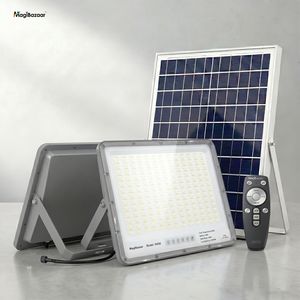
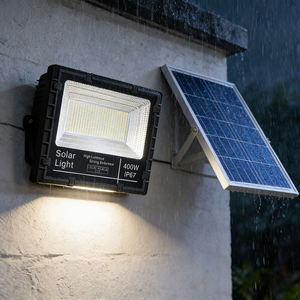
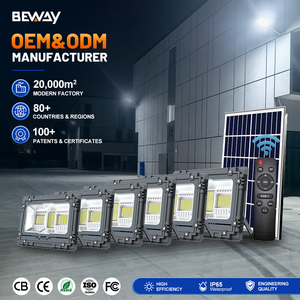
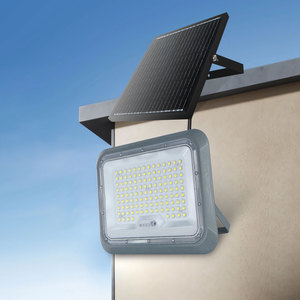
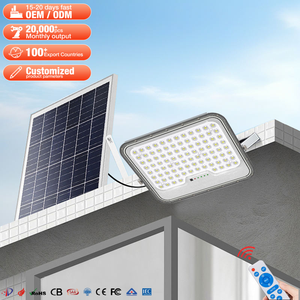
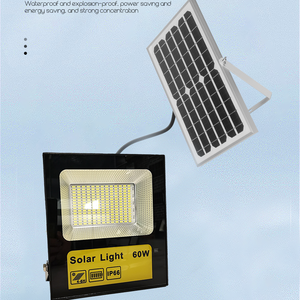
All-In-Two / Split Type: Separates a larger solar panel from the fixture housing. This allows independent panel tilt adjustments to maximize solar capture in high-latitude regions and supports ultra-high-wattage luminaires (100W–300W LED running all night) requiring massive solar panels on 9m–15m poles.