
Explore our CE-certified, high-efficiency solar floodlights and street light systems engineered for heavy-duty industrial compounds, high mast sport courts, and multi-lane municipal roadways.
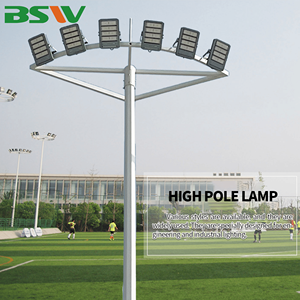
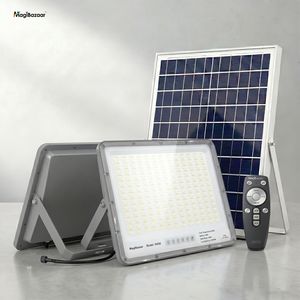
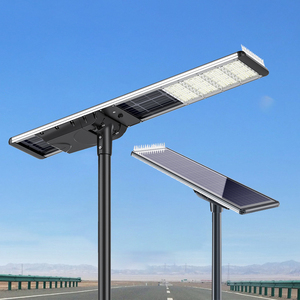
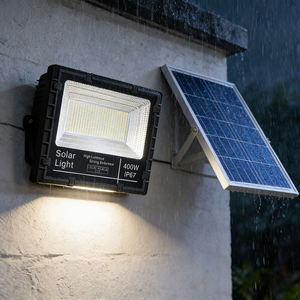
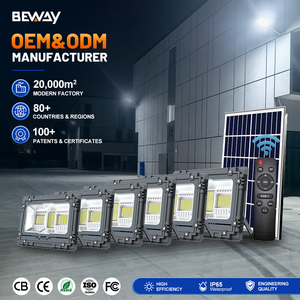
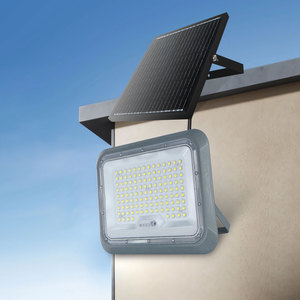
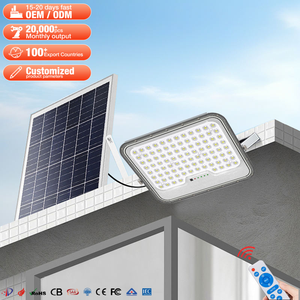
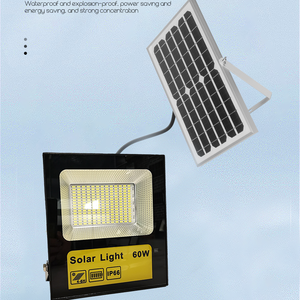
In modern municipal and commercial infrastructure development, road lighting represents a significant operational cost and carbon footprint. As global municipalities strive toward Net-Zero carbon emissions and energy autonomy, the procurement of CE Certified Dual Arm Commercial Solar Street Lights has accelerated exponentially. Dual-arm solar lighting systems represent the pinnacle of off-grid roadway engineering, offering dual-directional photometric coverage from a single structural pole foundation.
Unlike single-arm luminaires that are restricted to illuminating one side of a thoroughfare or lane, dual-arm commercial solar street lights are specifically configured for median strip mounting on dual carriageways, multi-lane expressways, wide perimeter boulevards, and expansive industrial logistical hubs. By utilizing a single high-strength steel pole to support two independently articulated LED optical engines and dual solar panels (or single high-capacity bifacial panels), civil works costs—including foundation footings, trenching, and pole installation—are reduced by up to 42% per illuminated kilometer.
Achieving uniformity across wide roadways requires strict adherence to international lighting standards such as EN 13201 (Europe) and IESNA RP-8 (North America). Dual arm commercial solar systems engineered by verified exporters like SOLTECH incorporate tailored optic designs:
Utilizing Lumileds 5050 LED chips driven by high-efficiency Constant Current drivers, delivering maximum illumination with minimum watt draw to maximize battery longevity.
Equipped with high-density Lithium Iron Phosphate cells providing 3,500+ deep discharge cycles at 80% DOD, operating reliably between -20°C and +65°C environments.
Full European CE certification guaranteeing low-voltage safety (LVD 2014/35/EU) and zero electromagnetic interference (EMC 2014/30/EU) for municipal telecommunication safety.
Evaluate why CE Certified Dual Arm Commercial Solar Street Lights significantly outperform traditional AC grid sodium lighting and low-grade residential solar alternatives.
| Performance Metrics | Dual Arm Solar Street Light (SOLTECH) | Traditional Grid-Tied HPS Light | Low-Cost Residential Solar Light |
|---|---|---|---|
| Luminous Efficacy | 200 Lm/W (Ultra High) | 80 - 100 Lm/W | 100 - 120 Lm/W |
| System Lifetime | 10 - 12 Years (5-Yr Warranty) | 3 - 4 Years (Lamp replacement) | 1 - 2 Years |
| Battery Chemistry | LiFePO4 (3,500+ Cycles) | N/A (Grid Dependent) | Ternary NCM / Lead-Acid (500 Cycles) |
| Trenching & Wiring Cost | $0 (100% Off-Grid) | $50 - $120 per linear meter | $0 |
| Autonomy (Rainy Days) | 5 - 7 Continuous Days | 0 Days (Fails during blackouts) | 1 - 2 Days |
| Certifications | CE, LVD, EMC, RoHS, UL, DLC | CE, UL | Non-Certified / Basic CE |
| Wind Resistance Rating | Class 16 Typhoon (160 mph) | Varies by pole design | Low (<60 mph) |
As a global leader in commercial solar LED lighting with over 20 years of manufacturing experience, our company operates 5 proprietary manufacturing facilities dedicated to full vertical integration. From precision aluminum die-casting to advanced Surface Mount Technology (SMT) LED assembly, automated battery pack balancing, and custom MPPT controller firmware development—every single component undergoes rigorous quality control protocols.
Our commitment to quality assurance ensures that every CE Certified Dual Arm Commercial Solar Street Light shipped to municipal partners in Europe, the Middle East, the Americas, and APAC meets the stringent requirements of government tenders and public works contracts.
Total quality management from raw aluminum smelting to optical lens molding and high-precision electronic manufacturing ensures 100% component consistency.
Certified under CE LVD/EMC directives, RoHS, UL Listed standards, DLC lists, and verified photometric IES files for seamless municipal tender acceptance.
Partnered with tier-1 global electrical distributors such as WESCO, Border States, Platt, Lonestar, and Echo Electric to guarantee localized support and rapid logistics.
Over 500 successful commercial and municipal installations worldwide operating flawlessly in high-salinity coastal zones, extreme cold environments, and high-temperature desert terrains.
The commercial and municipal solar lighting sector is undergoing a rapid technological evolution driven by smart city initiatives, advancements in materials science, and stringent decarbonization mandates. B2B procurement officers and civil engineers must align their purchasing strategies with key trends shaping the next decade of off-grid solar street illumination:
Future municipal tenders no longer look for standalone dumb lights. Modern dual-arm commercial solar street lights are increasingly specified with standard Zhaga or NEMA 7-pin sockets integrated with smart wireless controllers. Procurement teams can remotely monitor real-time battery state of charge (SoC), solar harvesting watts, ambient temperature, and LED driver health via centralized City Management Systems (CMS). Automated fault detection drastically reduces operational maintenance costs.
Traditional single-sided solar panels are being superseded by N-Type TOPCon bifacial solar panels and wrap-around cylindrical PV modules. Bifacial solar panels absorb direct sunlight from the top face while simultaneously capturing up to 25% additional albedo reflection from light-colored concrete highways and surrounding terrain below. This yields superior energy harvesting during cloudy winter days.
Rather than running at fixed wattages all night, dynamic solar controllers utilize machine learning algorithms to auto-adjust brightness curves based on seasonal night duration, historical weather patterns, and real-time radar motion detection. During low-traffic hours (e.g., 1:00 AM to 4:00 AM), lights dim to 30% baseline output, instantly ramping up to 100% full illumination when vehicular or pedestrian movement is sensed.
Environmental standards increasingly demand protection of natural nocturnal ecosystems. Future procurement specs emphasize amber-spectrum (2200K - 2700K) LED drivers or dynamic CCT shifting (switching from 4000K neutral white in early evening to 2200K warm amber late at night) to prevent disruption to migratory wildlife while fulfilling human safety vision needs.
While the initial capital expenditure (CAPEX) for high-grade dual-arm commercial solar street lights may be slightly higher than bare legacy luminaire heads, the overall Total Cost of Ownership over a 10-year lifecycle demonstrates undeniable financial advantages:






Technical, compliance, and logistical guidance for procurement directors, civil engineering contractors, and government tender committees.
Request direct factory pricing, DIALux photometric calculations, or custom OEM technical proposals for your upcoming municipal infrastructure tender.