
Explore our industrial-grade off-grid floodlights, high-mast sports illuminators, and integrated street lights engineered for heavy-duty commercial deployment.
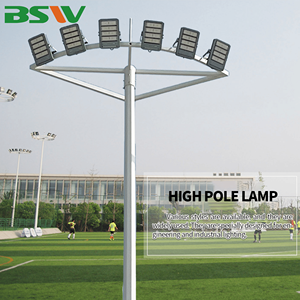
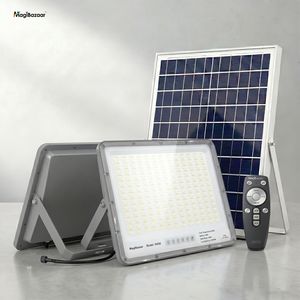
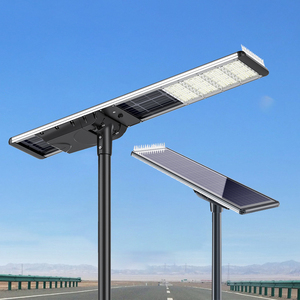
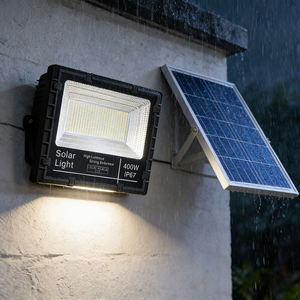
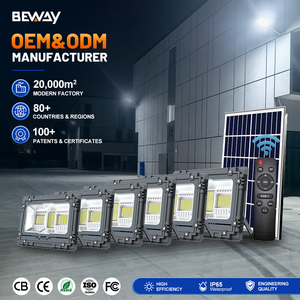
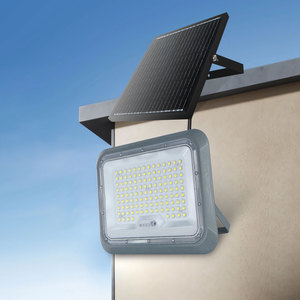
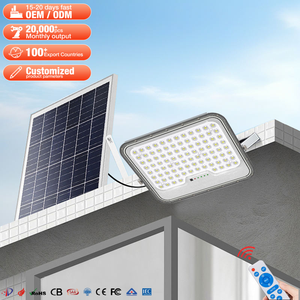
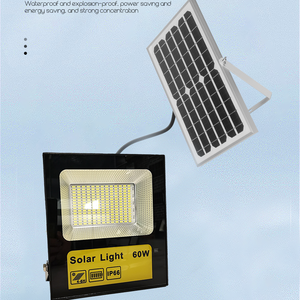
Operating across 5 state-of-the-art manufacturing plants, we combine full vertical integration with rigorous European compliance to engineer commercial solar lighting systems built for 20+ years of zero-maintenance field operation.
Unlike secondary assemblers, our facility manages the complete lifecycle in-house—from precision aluminum die-casting and robotic SMT PCB assembly to proprietary MPPT dimming controller design and optics molding.
Every commercial fixture undergoes comprehensive testing for LVD (Low Voltage Directive), EMC (Electromagnetic Compatibility), and Photobiological Safety (EN 62471). Fully certified for European municipal and enterprise tenders.
Utilizing tier-1 Lumileds / Bridgelux LED matrices mated with high-transmittance optical PC lenses, our systems extract maximum foot-candles per watt, significantly reducing required solar panel dimensions and pole wind-load ratings.
We provide complimentary Dialux photometric simulation, customized IES file modeling, tailored color temperature matching (3000K-6500K), and bespoke bracket configurations for large-scale engineering tenders.
Engineered with automotive-grade Grade-A Lithium Iron Phosphate cells paired with intelligent thermal management BMS, maintaining robust 7-day winter autonomy even under severe cloud cover and sub-zero conditions.
Integrated multi-stage dimming algorithms allow automated lumen modulation via microwave motion sensing, ambient light harvesting, or pre-programmed time schedules, expanding battery life expectancy up to 10 years.
Commercial outdoor lighting infrastructure is currently undergoing a structural transformation. Municipalities, industrial zone operators, commercial real estate developers, and logistics hubs are rapidly transitioning away from grid-tied metal halide and high-pressure sodium (HPS) fixtures toward off-grid, CE-certified dimmable solar LED systems. This technical analysis explores the optical engineering, thermal dynamics, electronic dimming protocols, and economic trade-offs governing next-generation commercial solar light procurement.
Core Engineering Principle: Luminous Efficacy (Lm/W) combined with Dynamic Photometric Dimming is the single most critical factor in modern solar light design. By increasing system efficacy to 200 Lm/W and implementing intelligent time/motion dimming, required battery capacity and solar panel area drop by up to 55%, dramatically lowering capital expenditure (CapEx) and wind load structural requirements.
In international commercial project tenders, CE certification (Conformité Européenne) serves as the foundational baseline for electrical safety, electromagnetic compatibility, and structural integrity. For dimmable solar lights, obtaining a authentic CE mark requires compliance across multiple complex directives:
The lifetime and autonomy of commercial solar lights depend almost entirely on how intelligently energy is drawn from the LiFePO4 battery pack. Traditional non-dimmable fixtures operate at a static watt rating throughout the night, rapidly depleting reserves during consecutive overcast or rain days.
| Technical Parameter | Standard Fixed Solar Light | CE Certified Dimmable Solar Light | Engineering Advantage |
|---|---|---|---|
| Controller Efficiency | 75% - 82% (Standard PWM) | 95% - 98% (Smart MPPT Tracking) | +20% faster solar charging yield |
| Lumen Modulation | Fixed 100% Output | Dynamic 5-Stage Dimming + Microwave Sensor | Stretches battery autonomy up to 7 rainy days |
| System Efficacy | 120 - 140 Lm/W | 190 - 210 Lm/W (Lumileds 5050/3030) | Higher lux output with smaller panel sizes |
| Battery Life Expectancy | 2 - 3 Years (Lead-Acid / Low Grade Lithium) | 8 - 12 Years (Grade-A LiFePO4 + Smart BMS) | Drastically reduced maintenance CapEx |
| Dimming Response | None (Constant Current) | 0-10V, PWM Step-Down, Adaptive Dusk-to-Dawn | Eliminates unnecessary dark-sky light pollution |
Modern commercial solar dimmable lights utilize integrated microwave motion sensors (radar-based 5.8GHz scanning) rather than legacy Passive Infrared (PIR). Microwave sensors penetrate PC housings and operate flawlessly in high heat, heavy rain, or dusty factory environments. The controller maintains a ambient 30% dimming power state (conserving energy), ramping smoothly to 100% full brightness within 0.2 seconds upon vehicle or pedestrian detection.
Achieving uniform ground lux levels without hot-spots or harsh light spill is critical for commercial logistics parks, municipal roadways, and sports court installations. Our factory integrates specialized optical PMMA lenses featuring Type II-Medium, Type III-Short, and Asymmetric Flood light distributions.
By offering zero-degree tilt optical cut-offs, these CE-certified luminaires comply with International Dark-Sky Association (IDA) guidelines, reducing atmospheric skyglow while ensuring roadway glare indices (UGR) remain below 19 for driver safety.
Analyzing key technology shifts, energy regulations, and smart infrastructure demands that will shape B2B solar lighting procurement through 2030.
Procurement mandates are rapidly shifting toward IoT-enabled luminaires. Future commercial solar fixtures will feature integrated Zigbee, LoRaWAN, or Cellular NBIoT modules allowing municipal engineers to remotely monitor battery health, adjust dimming profiles across thousands of poles from a single cloud dashboard, and run predictive maintenance diagnostic routines automatically.
Traditional P-type PERC panels are reaching efficiency ceilings (~21%). The industry is aggressively transitioning to N-type TOPCon and bifacial cylindrical PV modules capable of reaching 24.5%+ conversion efficiency. This allows commercial solar floodlights to generate ample charging currents even in high-latitude regions with low sunlight angles during winter months.
Environmental standards in Europe (such as the EU Battery Regulation) are making single-use glued solar assemblies obsolete. Commercial buyers now demand modular, standardized components where battery packs and electronic controllers can be swapped toollessly on the pole in under 3 minutes, extending fixture lifespan to 20+ years.
Ecological regulations surrounding coastal and park lighting require strict control over blue light wavelengths (400-480nm). Future commercial procurement will require multi-channel LED chips capable of dynamically shifting color temperature from 5000K daylight during early evening hours to 2200K amber during late night hours to protect wildlife and human circadian rhythms.
Technical and commercial clarity for project engineers, EPC contractors, and lighting distributors.
Elevate your enterprise projects with CE-certified, high-efficacy dimmable commercial solar lights. Receive direct factory B2B wholesale pricing, custom photometric reports, and comprehensive product catalogs.