
2025 400W 600W 800W 1000W Solar LED Flood Light For Outdoor Sports Stadium
CE Certified
High Mast
Stadium Grade

Explore our top-tier CE-certified commercial solar flood lights, integrated streetlights, and high-mast systems designed for zero-maintenance utility operation.
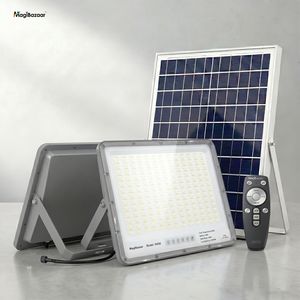
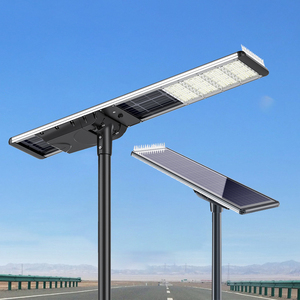
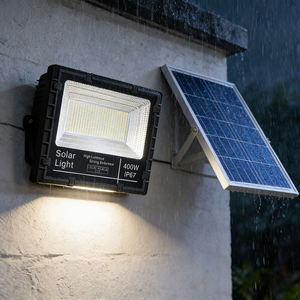
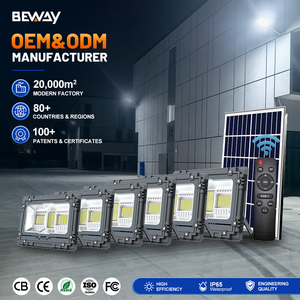
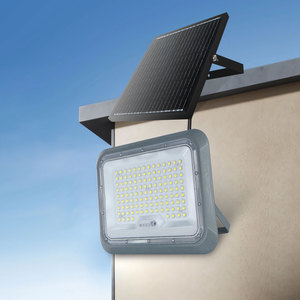
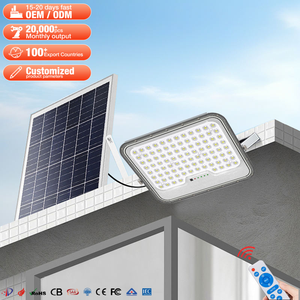
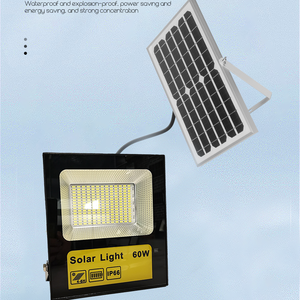
From die-cast ADC12 aluminum thermal management to proprietary MPPT firmware, our vertically integrated manufacturing guarantees uncompromised quality.
Operating 5 specialized manufacturing hubs, we control the entire lifecycle: high-pressure die-casting, automated SMT LED pick-and-place, BMS fabrication, and photometric testing.
Fully compliant with EN 60598-2-3, EN 62471 photobiological safety, RoHS, and CE standards. Factory audits strictly adhere to ISO 9001 and ISO 14001 certification frameworks.
Utilizing high-density Lithium Iron Phosphate (LiFePO4) chemistry providing over 4,000 deep discharge cycles at 80% DoD, operating flawlessly in ambient temperatures from -20°C to +65°C.
Engineered with batch-certified Lumileds / Cree LED chips paired with customized optical Grade PC lenses offering Type II, Type III, and asymmetric flood light polar distributions.
Our dynamic Maximum Power Point Tracking (MPPT) solar charge controllers maintain an industry-leading >98.5% conversion efficiency with auto-dimming profiles and radar sensor integration.
Tailored engineering support for municipal tenders, highway illumination, industrial zone security, and coastal turtle-friendly dark-sky compliant lighting schemes.
In the contemporary urban lighting landscape, off-grid commercial solar LED lighting has evolved from an environmental alternative to an essential engineering solution. Driven by rapid decarbonization mandates, rising grid electricity rates, and high underground trenching costs, commercial real estate developers, municipal engineers, and industrial contractors are actively transitioning to standalone solar luminaires. This guide outlines the core engineering parameters, system architecture, and compliance standards required for deploying commercial-grade CE certified solar lighting systems.
Achieving municipal-grade lux compliance while preserving complete electrical independence requires balancing photovoltaic output, lumen output per watt (Lm/W), and battery depth of discharge (DoD). Modern commercial solar floodlights and streetlights must achieve system efficacy exceeding 180 to 200 Lm/W at the fixture level, achieved through multi-junction LED chips driving low forward voltage combined with high-transmittance optical lenses.
The operational resilience of an off-grid solar light relies on its energy capture system. High-efficiency N-Type TOPCon monocrystalline solar panels now yield conversion efficiencies exceeding 23.5%. Paired with intelligent MPPT (Maximum Power Point Tracking) charge controllers, solar energy conversion is maximized even under overcast conditions or low solar irradiance.
| System Component | Standard Commercial Grade | Architectural Industrial Grade (Our Spec) | Engineering Advantage |
|---|---|---|---|
| Solar Panel Tech | Polycrystalline (17-19% Eff.) | N-Type Monocrystalline (23.5%+ Eff.) | +35% energy harvesting in low light & cloudy climates |
| Charge Controller | PWM Control (70-75% Efficiency) | Smart Adaptive MPPT (>98.5% Efficiency) | Dynamic voltage tracking speeds up battery recharge rate |
| Battery Cell Chemistry | Ternary Lithium / Lead Acid | Grade-A LiFePO4 (Lithium Iron Phosphate) | 4,000+ lifecycle cycles, zero thermal runaway risk |
| Enclosure Construction | Thin Stamped Sheet Metal / Plastic | Die-Cast ADC12 Aluminum with Corrosion Coating | IK10 impact rating, IP67 ingress protection, 10-yr structural lifecycle |
Thermal dissipation remains the primary vector affecting LED diode degradation and battery lifespan. Industrial solar flood lights feature high-density die-cast ADC12 aluminum heat sinks engineered with vertical thermal convection fins. This design maintains junction temperatures (Tj) below 65°C even when operating at maximum wattage output in high ambient thermal environments (+50°C).
Furthermore, fixtures engineered for heavy construction sites, football stadiums, and highway corridors must hold verifiable IP67 water ingress protection ratings and IK10 mechanical impact ratings. High-tensile tempered glass cover plates prevent optical yellowing under intense UV exposure while protecting internal LED matrices from wind-blown debris, heavy snow loads, and high-pressure water washing.
As smart cities and zero-emission logistics hubs expand globally, purchasing specifications are evolving toward IoT intelligence and circular manufacturing.
Future-ready solar luminaires are integrating LoRaWAN, Zigbee, and Cellular IoT gateways. Facility managers can remotely monitor battery health, adjust dimming profiles, and receive instant diagnostic alerts from cloud management dashboards.
Moving beyond static timers, next-generation solar street lights use machine learning to calculate historical weather patterns, adjust lumen output dynamically, and guarantee 365-night uninterrupted illumination even during prolonged winter rain.
Procurement RFPs increasingly mandate toolless maintenance access. Modular quick-connect battery packs and driver bays allow field technicians to replace components in under 5 minutes, significantly lowering total cost of ownership (TCO).
Answers to common engineering, compliance, and ordering questions from international buyers, distributors, and EPC contractors.
Our commercial solar luminaires undergo rigorous testing by accredited third-party laboratories. CE compliance covers EN 60598-2-3 (luminaires for road and street lighting), EN 55015 & EN 61547 (EMC electromagnetic compatibility), and EN 62471 (photobiological safety), ensuring full compliance for European and global municipal installations.
Systems are oversized using a minimum 5 to 7 days battery autonomy matrix. Combined with intelligent MPPT dynamic dimming controllers, the luminaire automatically scales output down to 30% during low traffic hours (boosted back to 100% via microwave radar sensors upon detecting motion), preserving battery energy across long rainy periods.
Lithium Iron Phosphate (LiFePO4) offers thermal stability, zero risk of thermal runaway, and an operating lifespan exceeding 4,000 discharge cycles at 80% Depth of Discharge (DoD). Standard NMC batteries typically degrade after 800-1,200 cycles. LiFePO4 allows our systems to operate reliably for 10+ years without battery replacement.
Yes. We maintain an in-house goniophotometer laboratory. We generate verified IES and LDT photometric files for all standard and custom optical distributions, allowing lighting designers and engineers to conduct Dialux / Relux simulations for municipal tenders.
Installing traditional AC grid lighting requires expensive trenching, conduit laying, wiring, electrical permits, and transformer hookups—often costing $50 to $120 per linear foot. Standalone commercial solar lights eliminate trenching costs entirely, zero out monthly utility bills, and achieve payback in as little as 12 to 18 months.
Absolutely. Operating 5 dedicated manufacturing plants, we provide turnkey OEM/ODM services including housing color powder coating (RAL specs), custom bracket/pole adapters, branded housing silk-screening, custom CCT color temperatures (2700K to 6500K), and tailored BMS firmware.
Partner with a premier CE-certified commercial solar lighting manufacturer. Connect with our engineering sales team for Dialux simulation support, sample units, and factory direct quotations.