0%

Choosing BAA Compliant Solar Lights in 2026 takes more than comparing brightness and price. Buyers also need to understand the project’s procurement requirements and verify that each product meets them. A product description alone is not proof.

This guide explores solar lighting options for public facilities, parking areas, pathways, and other outdoor sites. It considers practical details, including light output, battery capacity, runtime, weather resistance, installation needs, and warranty coverage. A fixture that performs well on paper may still disappoint if winter sunlight is limited or replacement parts are difficult to source. Real conditions matter.

Documentation matters, too. Depending on the solicitation, buyers may need supplier statements, manufacturing details, or other records to assess compliance. Requirements can differ by contract, so confirm them with the contracting authority before purchasing. Do not assume that one label settles every question.

The comparison focuses on questions worth asking suppliers, not unsupported guarantees. Ask where key components are manufactured, what records are available, and how the product is tested. Then compare those answers with the project’s written requirements. Small details count. A missing document can slow a purchase, while an undersized battery can leave a walkway dark before dawn. This guide aims to help buyers weigh compliance evidence and field performance together. Some product information may be incomplete, so independent verification remains essential.
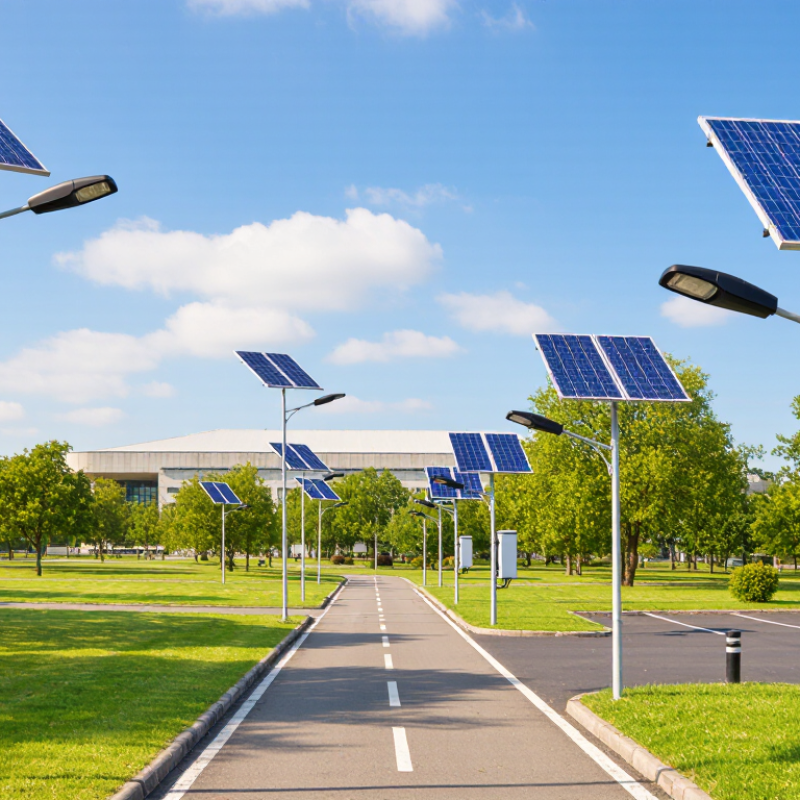
2026 Top BAA Compliant Solar Lights for Buyers?

Define 2026 BAA Eligibility: FAR Requires 65% Domestic Content Through 2028

For 2026 buyers, “BAA compliant” is not a universal product stamp. The Buy American Act applies to covered federal procurements, and the solicitation controls the test. Under the FAR, the domestic-content threshold for covered manufactured end products is 65% through 2028. The calculation generally looks at component cost, not the share of parts made in the United States. That distinction matters. A fixture assembled domestically may still contain imported photovoltaic panels, batteries, controllers, or poles. Assembly alone is not proof.

Ask for a bill of materials, component-origin declarations, and cost records tied to the offered configuration. Keep them. Confirm whether the item is treated as a commercial off-the-shelf product, since different FAR provisions may affect the component test. Also check the solicitation’s clauses, any trade-agreement terms, and required certifications; not every solar-light purchase follows the same pathway. Details can feel tedious. They are also where a promising claim gets tested. If a supplier cannot explain how its 65% figure was calculated, treat the claim as unverified and seek clarification before award. A little uncertainty here is better than confident paperwork that does not match the delivered light.

Trace U.S. Origin and Cost Across PV Modules, Batteries, LEDs, and Controls

2026 Top BAA Compliant Solar Lights for Buyers?

Trace U.S. Origin and Cost Across PV Modules, Batteries, LEDs, and Controls

A solar light’s U.S. origin cannot be confirmed by its final assembly address alone. Buyers need a component-level trail. Request bills of materials, supplier origin statements, invoices, and manufacturing records for the PV module, battery cells and pack, LED board, driver, and control electronics. Keep records tied to specific models and production batches. Details matter.

BAA eligibility depends on the procurement’s applicable requirements and how the product is evaluated. A domestic component may still contain imported materials, while assembly steps can affect origin analysis. Ask suppliers to explain where parts are made and where key manufacturing occurs. Verify claims against the actual solicitation; do not rely on a general “U.S.-made” label. Requirements can differ.

Cost tracing makes the sourcing picture more useful. Compare each component’s price, labor, freight, and processing costs, then note the method used to allocate shared costs. Battery cells may be imported even when packs are assembled domestically. LED boards and control circuits can also have layered supply chains. Ask for dated documentation, and record unanswered questions. The paperwork may be imperfect; flag gaps rather than quietly treating estimates as facts. A clear cost ledger helps buyers assess price premiums and identify which origin claims need stronger evidence.

2026 Top BAA-Compliant Solar Lights for Buyers? — Trace U.S. Origin and Cost Across PV Modules, Batteries, LEDs, and Controls
Component or review area U.S.-origin reality to verify Cost data to request Buyer evidence and checks
PV module Modules may be manufactured in the United States, but the origin of cells, wafers, and other inputs can differ. Module assembly location alone does not establish that the complete light meets a domestic-content test. Request the module’s quoted unit cost, country of manufacture, and a component-level cost breakdown. Do not infer domestic content from the retail price of the finished light. Obtain a signed origin declaration identifying the module and relevant subcomponents. Reconcile the supplier’s documentation with the solicitation’s applicable BAA test.
Battery cells and pack Cell manufacture, pack assembly, and the origin of battery materials are separate facts. A U.S.-assembled pack may contain cells or materials sourced elsewhere. Request separate prices for cells, battery-management electronics, and pack assembly where available. Ask suppliers to identify which costs are included in the quoted battery price. Collect cell and pack country-of-origin declarations, bills of materials, and manufacturing-location details. Do not treat pack assembly location as proof of cell origin.
LEDs and optics LED die, package, board assembly, and optical components can have different origins. U.S. design or board assembly does not by itself establish the origin of the LED components. Ask for separate prices for LED packages, circuit boards, lenses, and assembly if the supplier can provide them. Record the basis and date of each quote. Request component-level country-of-origin information and manufacturing steps. Check that documentation refers to the exact product configuration being offered.
Charge controller, sensors, and communications Control boards may be assembled in the United States while semiconductors and other electronic parts have varied origins. Software location does not establish hardware origin. Request costs for the controller board, sensors, wireless modules, and any control software or programming separately where practicable. Ask for a bill of materials, board-assembly location, and origin declarations for relevant components. Verify whether optional sensors or communications modules change the offered configuration.
Enclosure, pole, and mounting hardware Metal forming, finishing, and final assembly may occur in different locations. Identify the material and manufacturing steps rather than relying only on the shipping address. Request separate quoted costs for the pole, enclosure, brackets, and fasteners, including material and fabrication charges when available. For projects with separate iron-and-steel or construction-material requirements, review those requirements independently; they may not be the same as the BAA test for a product purchase.
Final assembly and finished product Final assembly in the United States is relevant but is not, on its own, enough to establish BAA compliance. The applicable procurement clause and product-specific facts control. Request the finished-unit price and a substantiated component-cost calculation. Keep the cost basis consistent across all domestic and foreign components. Obtain a product-specific certification, manufacturing description, and supporting cost records. Confirm that the certification covers the exact model, options, and production source offered.
Cost comparison across suppliers There is no reliable universal price or domestic-content percentage for “BAA-compliant solar lights”; pricing depends on design, quantities, specifications, and contract terms. Compare like-for-like quotations by unit price, quantity, shipping, installation, warranty, and separately identified component costs. Mark unavailable cost breakdowns as “not provided,” rather than estimating them. Use dated quotations and retain the supplier’s supporting records. Do not treat a marketing claim or a higher price as evidence of U.S. origin or compliance.
BAA scope and 2026 review “BAA compliant” is not a universal product label. Applicability depends on the procurement, contract terms, product classification, and any applicable exceptions or waivers. The Buy American Act is distinct from the Build America, Buy America requirements that can apply to federally funded infrastructure projects. Record the solicitation, contract clause, evaluation method, and any stated threshold or waiver used for the cost calculation. Do not apply a threshold without confirming the governing clause. Have the contracting authority or qualified procurement counsel confirm the applicable rules. This table is a sourcing checklist, not a determination that any particular solar light qualifies.

Apply FAR’s 70% Domestic-Content Threshold Taking Effect in 2029

For solar-light buyers, domestic content can matter as much as brightness or battery life. One detail needs checking: under the current FAR Buy American schedule, the general domestic-content threshold is set to reach 75% in 2029, not 70%. The exact requirement depends on the solicitation and applicable clauses. Read those before treating a product as compliant.

A solar light contains several cost-bearing parts: its panel, battery, controller, LEDs, and often its pole or housing. Ask suppliers for a component-cost breakdown and records showing where parts were made and the final product was manufactured. A US assembly address alone does not prove that the required domestic-content test is met. Keep the evidence with the bid file.

Small details matter. A battery model change can alter the cost calculation, even when the light looks identical. Buyers should request updated documentation when components or suppliers change, and check whether any stated exception applies. This takes extra time. It is still better than discovering a paperwork gap after delivery. I would not rely on a broad “domestic” label without supporting records.

Assess Roadway Photometrics Against IES RP-8 Recommended Practice

2026 Top BAA Compliant Solar Lights for Buyers?
Assess Roadway Photometrics Against IES RP-8 Recommended Practice

For roadway projects, fixture wattage alone says little about visibility. Assess proposed solar lights against the applicable IES RP-8 recommendations for the road’s layout and use. Review average illuminance or luminance, uniformity, and glare—not just the brightest point beneath a pole. Ask for calculation files showing pole spacing, mounting height, pavement assumptions, and the measurement grid. Small changes matter. A wide spacing can leave dark bands between pools of light.

Solar output can vary with battery charge, control settings, and weather. Request photometric data at the operating level expected late in the night, not only at full output. Compare maintained performance with initial values, and confirm the assumptions behind any light-loss factors. One awkward truth: a tidy calculation is not a field test. A nighttime site check can reveal shadows, spill light, or uneven pavement response that a model misses. Keep sourcing documentation for BAA procurement separate from the photometric review; one does not establish the other.

Tips: Match the road classification and geometry before comparing products. Check dimming schedules, then verify light levels on site after installation. Record the test conditions, including battery state and control settings.

2026 Top BAA-Compliant Solar Lights for Buyers?

Assess roadway photometrics against the project’s applicable IES RP-8 recommended practice.

Illustrative example only: The chart shows sample illuminance readings, not measured performance from a product or a verified RP-8 compliance result. Actual criteria depend on roadway classification and project conditions; review the luminaire’s IES photometric file and project calculations. BAA compliance requires separate sourcing documentation.

Compare Solar-Light Life-Cycle Costs Using DOE Evaluation Methods

A solar light’s purchase price is only the opening line in its cost story. DOE-style life-cycle cost evaluation compares costs over a defined service period, rather than judging equipment by its initial price. For a fair comparison, record the delivered and installed cost, expected battery replacements, maintenance visits, and any component replacements. Use the same analysis period and assumptions for every option.

Then discount future costs to present value using the applicable DOE evaluation guidance. A battery replacement in year six does not cost the same as one today. Include realistic labor and access costs, especially for lights mounted on tall poles or remote paths. Check warranty terms and expected service life, but do not treat either as a guarantee. Small details matter.

Keep the inputs visible. A table showing replacement years, labor hours, and discount assumptions makes review easier. A neat spreadsheet can still be wrong. One weak point is uncertain service life: local shade, winter conditions, and usage patterns may differ from estimates. Test assumptions against site records when available, and run a sensitivity check for shorter battery life or higher maintenance costs. For procurement, assess BAA compliance separately through the required product and sourcing documentation; it should not be inferred from a favorable life-cycle cost.

FAQS

Does “BAA compliant” apply to every solar-light purchase?

No. The Buy American Act applies to covered federal procurements. Check the solicitation and its clauses.

What domestic-content threshold applies through 2028?

The general threshold for covered manufactured end products is 65%. The specific solicitation may affect the test.

What threshold is scheduled for 2029?

Under the current FAR schedule described here, it is 75%, not 70%. Verify the applicable clauses.

How is domestic content generally calculated?

The test generally considers component cost, not simply the percentage of parts made in the United States.

Does US assembly prove a solar light meets the test?

No. Imported panels, batteries, controllers, or poles may affect the calculation. Assembly alone is not proof.

What records should buyers request?

Ask for a bill of materials, component-origin declarations, and cost records for the offered configuration. Keep them with the bid file.

Can a small component change affect compliance evidence?

Yes. A different battery model can change the cost calculation, even if the light looks identical. Request updated records after changes.

What if a supplier cannot explain its percentage?

Treat the claim as unverified and seek clarification before award. Paperwork deserves a second look. I might be checking twice, but that seems wiser.

Conclusion

This guide explains how buyers can evaluate BAA Compliant Solar Lights in 2026 by looking beyond product claims to the origin and cost of key components. It outlines the 65% domestic-content threshold applicable through 2028 under the stated FAR framework and describes how to trace U.S. content across photovoltaic modules, batteries, LEDs, and control systems. Buyers can use this component-level review to understand how a product’s domestic-content calculation is supported.

The guide also considers the 70% threshold scheduled to take effect in 2029, helping buyers plan for future procurement requirements. For roadway projects, it recommends assessing lighting performance against IES RP-8 guidance, including relevant photometric needs. Finally, it introduces DOE evaluation methods for comparing life-cycle costs, so purchasing decisions can account for factors such as energy generation, maintenance, replacement, and expected service life—not just initial price.

Charlotte

Charlotte

Charlotte is a dedicated marketing professional with a strong understanding of the company’s products, services, and customer-focused solutions. With a thoughtful approach to communication and a keen eye for industry trends, Charlotte regularly contributes expert articles to the company’s......