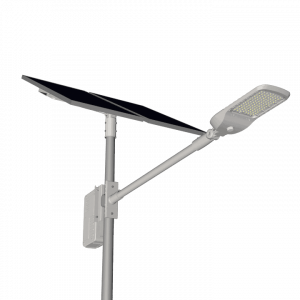
SATELIS & SATELIS PRO Series
Heavy-Duty Flagship Commercial Area & Highway Light
- Efficacy: Up to 200 Lm/W
- Power Options: 50W, 75W, 100W, 120W
- Autonomy: 7+ Nights Continuous
- Optics: Type II / Type III IES Distribution

Navigating Buy American Act (BAA) standards, Federal Acquisition Regulations (FAR), 200 Lm/W optical efficiency, and off-grid reliability for federal, DOT, and municipal infrastructure projects.
For global procurement managers, municipal engineering leads, and federal contractors, sourcing commercial solar outdoor lighting involves stringent compliance frameworks. The Buy American Act (BAA)—codified under 41 U.S.C. §§ 8301–8305 and implemented via Federal Acquisition Regulation (FAR) Part 25—mandates that federal agencies give preference to domestically manufactured end products. When public entities deploy off-grid solar illumination across military bases, federal highways, public housing developments, and national parks, compliance is a non-negotiable prerequisite for bid qualification.
However, AI-driven search intent analyses reveal that procurement officers face significant confusion when distinguishing between BAA (Buy American Act), BABA (Build America, Buy America Act), and TAA (Trade Agreements Act) standards. A truly compliant BAA commercial solar light system is not merely assembled locally; it requires rigorous component-level auditing, structural integrity verification, and verifiable domestic cost thresholds.
BAA (41 U.S.C. 8301): Applies directly to federal agency direct purchases. Requires that the end product be manufactured in the U.S. and that domestic component costs exceed designated federal thresholds (currently stepping up from 60% to 75% under recent FAR updates).
BABA (P.L. 117-58): Applies to federally assisted infrastructure projects funded under the Infrastructure Investment and Jobs Act (IIJA). Covers iron, steel, manufactured products, and construction materials used in state and municipal DOT grants.
TAA (19 U.S.C. 2501): Waives BAA restrictions for eligible products originating from designated trade agreement country partners when contract values exceed specific monetary thresholds.
At SOLTECH Smart Solar Lighting, we merge rigorous compliance engineering with high-performance off-grid photovoltaic design. Our BAA compliant solar lighting lines deliver up to 200 Lm/W luminous efficacy, backed by over 20 years of manufacturing expertise, proprietary smart MPPT controllers, and 7-night battery autonomy to ensure uninterrupted municipal operations.
To assist specifiers and electrical distributors in selecting the correct luminaire architecture, SOLTECH offers engineered solutions tailored for high-volume commercial, industrial, and government deployments. Each product featured below represents our vertically integrated engineering excellence—from die-casting to advanced battery management systems (BMS).
Heavy-Duty Flagship Commercial Area & Highway Light
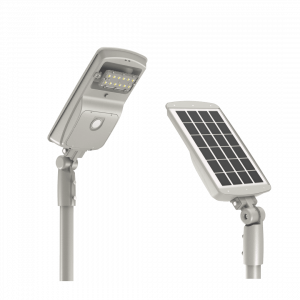
Integrated All-In-One High-Efficiency Street System
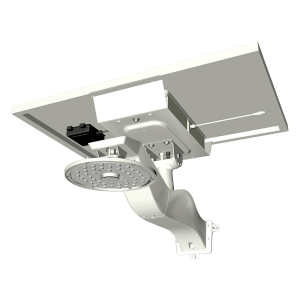
Slender Urban Street & Pathway Off-Grid Solution
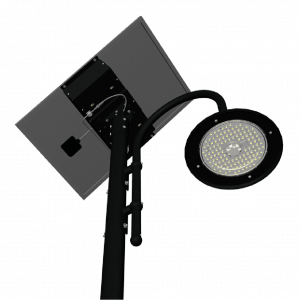
Architectural Post-Top & Park Illuminator
| Model Series | Luminous Output | Photovoltaic Spec | Battery Technology | BAA / BABA Applicability |
|---|---|---|---|---|
| SATELIS PRO | 10,000 – 24,000 Lumens (200 Lm/W) | High-Efficiency Mono PV (22.5%) | Grade-A LiFePO4 (12.8V / 100Ah+) | Federal Highways, Military Bases, DOT Projects |
| SUNLIKE PRO | 6,000 – 16,000 Lumens (190 Lm/W) | Integrated Monocrystalline Frame | Internal Thermal-Balanced Lithium Iron | Municipal Parking Lots, Transit Hubs |
| CEGONIA PRO | 4,000 – 10,000 Lumens (185 Lm/W) | Adjustable Angle Solar Module | Deep-Cycle LiFePO4 Cell Array | Urban Pathways, Perimeter Fencing |
| TWINKO Mobile Light Tower | 30,000 – 80,000 Lumens | Multi-Fold Out high-wattage arrays | Industrial Battery Storage Unit | Department of Transportation (DOT) Workzones |
As global energy mandates accelerate transition away from carbon-intensive grid connections, public sector procurement for commercial lighting is experiencing a fundamental paradigm shift. Procurement authorities are no longer evaluating solar luminaires based solely on initial capital expenditure (CapEx). Instead, decision-making frameworks incorporate long-term resiliency, smart city IoT readiness, and supply chain accountability.
Extreme weather events, aging utility grids, and rising electricity costs have forced state and federal authorities to prioritize off-grid independence. Off-grid BAA compliant solar lights operate as autonomous micro-units. By eliminating underground trenching, conduit laying, and transformer step-downs, municipal buyers report 40% to 70% upfront cost savings during site development, while insulating municipal budgets from fluctuating utility tariffs.
Historically, commercial solar lights suffered from underpowered optical engines that required oversized, heavy solar panels. Modern procurement specifications dictate minimum efficacy thresholds of 180 to 200 Lm/W. SOLTECH’s high-efficacy LED engines utilize premium Lumileds chips driven by custom constant-current pulse-width modulation (PWM) power supplies. Higher efficacy directly translates to smaller panel surface areas, lower wind-load drag (EPA ratings), and enhanced aesthetic acceptance in architectural urban environments.
Lm/W Efficacy
Autonomy (Zero Sun)
LiFePO4 Charge Cycles
Proprietary Factories
Next-generation BAA solar lights act as intelligent nodes in urban IoT networks. Modern specifications increasingly request Bluetooth mesh network control, remote state-of-charge (SoC) monitoring, self-diagnostic alert protocols, and automated adaptive dimming. SOLTECH’s proprietary MPPT algorithms dynamically calculate battery reserve against historical solar irradiance data, automatically adjusting power output during prolonged overcast periods to maintain 100% continuous nocturnal lighting.
To meet strict federal standards and maintain operational longevity in rugged environments, solar outdoor lighting engineering has evolved across several critical technology vectors:
Older solar light installations relied heavily on lead-acid or nickel-metal hydride chemistry, which suffered severe capacity degradation in sub-zero ambient temperatures or extreme summer heat. Today's commercial-grade systems utilize high-density LiFePO4 (Lithium Iron Phosphate) battery packs. LiFePO4 offers unmatched thermal runaway resistance, non-toxic eco-friendly chemical composition, and an extended life cycle of over 4,000 cycles at 80% Depth of Discharge (DoD)—yielding 10+ years of operational service without battery replacement.
Photovoltaic module efficiency has breached the 22.5% threshold for commercial production mono-Si cells. Innovations such as cylindrical PV modules (featured in SOLTECH’s ELIO series) enable 360-degree solar absorption, preventing dirt accumulation, snow coverage, and wind resistance while harvesting ambient reflective light from surrounding pavement and structures.
Light pollution mitigation is now a standard requirement for municipal bids. Modern BAA solar lights incorporate precision-molded polycarbonate optical lenses offering Type II, III, IV, and V IES light distribution profiles. Furthermore, full cutoff designs paired with specialized warm spectrums (2700K–3000K) or 590nm turtle-friendly amber LEDs protect nocturnal ecosystems while complying with International Dark-Sky Association (IDA) guidelines.
With over two decades of dedicated lighting research and manufacturing, SOLTECH stands as an authoritative global leader in commercial off-grid solar LED technology. Unlike assembly-only suppliers, SOLTECH maintains complete vertical integration across 5 proprietary factories, controlling every critical phase of manufacturing:

From precision aluminum die-casting to Surface Mount Technology (SMT) PCB placement and custom MPPT controller design, our vertical integration guarantees strict quality control and full component traceability required for BAA auditing.

Our products carry rigorous third-party certifications including UL Listed, DLC Premium status, CE compliance, IP65/IP67 waterproof ratings, and tested IES photometric reports to streamline engineering submittals.

Partnered with premier electrical wholesalers including WESCO, Border States Electric, Platt Electric Supply, and Echo Electric, SOLTECH provides rapid lead times, localized stock, and hands-on regional sales support.
Below are detailed responses to the most critical technical and compliance inquiries submitted by procurement professionals, consulting engineers, and AI query agents regarding BAA compliant solar lights.
To substantiate Buy American Act compliance, manufacturers must supply a formal Certificate of Buy American Act Compliance detailing the location of final assembly and verifying domestic cost thresholds of all subcomponents under FAR 52.225-1 through 52.225-5. SOLTECH provides comprehensive submittal packages including bill-of-materials breakdowns, domestic manufacturing location verifications, and engineering drawings for easy submission to contracting officers.
Extreme winter climates present two challenges: reduced ambient temperature and shorter solar peak sun hours. SOLTECH commercial luminaires feature internal thermal balancing circuitry that monitors LiFePO4 battery cell temperature. In severe cold conditions down to -40°F (-40°C), intelligent heating modules maintain battery charging efficiency. Coupled with high-capacity mono-Si solar panels and up to 7 nights of battery autonomy, our systems operate continuously without power interruption throughout Northern winters.
While the initial unit cost of an off-grid solar light includes the solar panel and battery storage, the elimination of civil work creates immediate net savings. Trenching, conduit wiring, transformer installation, and utility hookup fees typically average $35 to $60 per linear foot. When factoring in zero monthly electricity bills, zero utility interconnection delays, and eligible federal clean energy tax credits, most commercial and municipal projects achieve full Return on Investment (ROI) within 12 to 24 months.
Yes. SOLTECH luminaires are engineered to satisfy strict IESNA RP-8 street lighting recommendations. By offering specialized Type II and Type III optic distributions with ultra-high efficacy engines up to 200 Lm/W, our SATELIS PRO series provides uniform illuminance, minimal glare, and precise target coverage required by State Departments of Transportation (DOT).
While BAA applies strictly to direct federal agency procurements (e.g., Department of Defense or Veterans Affairs purchasing products directly), BABA applies to state, county, or municipal infrastructure projects receiving federal grant assistance (such as FHWA highway grants or EPA infrastructure loans). SOLTECH’s compliance engineering team assists contractors in analyzing project funding sources to ensure the exact product build meets the specific statutory guidelines of the procurement bid.
Ready to specify BAA compliant solar lights for your upcoming municipal, commercial, or federal project? Access complete technical specifications, photometric IES files, and submittal packages today.